Road building
The motorway in Bihor, which was left unfinished 13 years ago, is to be built as part of an exemplary Romanian-Hungarian cooperation

A motorway project of historic significance in many respects is currently underway in Transylvania, near the Hungarian-Romanian border. The Berettyószéplak–Bisztraterebes section in Bihar County is, on the one hand, a project that has been on hold for many years:
Since the departure of the first contractor, the American firm Bechtel, in 2013, contracts have been signed with numerous companies, but the project has always fallen through.
Furthermore, the project is of key importance because the Bihor section of the A3 motorway in northern Transylvania, together with the other sections currently under construction, could be completed within a few years. The A3 will thus create a continuous motorway link across Transylvania, stretching from the Hungarian border all the way to Székely Land, and will also pass through several other regions with Hungarian populations.

The long-awaited completion of the project is also a milestone because Romanian and Hungarian road construction companies have played a leading role in this project of national significance.
The Romanian main contractor, Erbasu Transilvania Sa, has commissioned a four-member consortium as a subcontractor: the lion’s share of the work will be carried out by the Hungarian companies EuroAszfalt Kft., Kelet Út Kft. and Albert Bau Kft., as well as the Romanian-Hungarian company Metal Hammer Bau Srl., will carry out the work on the 26.35-kilometre section.
We spoke with the heads of the four companies involved at the Budapest headquarters of EuroAszfalt, the consortium leader, about the significance and challenges of the Romanian-Hungarian project.
The Romanian general placed his trust in the Hungarian road-builder, who has an impressive track record
The main contractor, Erbasu, is a Romanian family-owned construction firm operating nationwide. Until now, it has primarily focused on building construction, but in recent years it has been making increasing inroads into the field of infrastructure construction as well: for this reason, securing the contract for this project in Bihor and its successful completion represent a crucial step for the company.

Thanks to the launch of numerous major projects, the Romanian road construction sector has now seen significant expansion. Seizing this opportunity, and having become familiar with the Hungarian company’s references through personal contacts, Erbașu – the winner of the public tender for the Berettyószéplak–Bisztraterebes section – requested a quotation from EuroAszfalt for the asphalting works on the section. At the same time, Metal Hammer Bau – a long-standing and trusted partner of Erbașu – and Albert-Bau, which also has Transylvanian roots but is based in Hungary, recommended the Hungarian company to the Romanian general contractor as a firm with significant references in Hungarian road construction. Following the tender, the Erbașu delegation visited Hungary in person to assess the Hungarian road construction capabilities and was thoroughly satisfied with what they saw.
Professional and human considerations took precedence over national prejudices
The four companies involved ultimately signed a contract with the main contractor as part of a consortium led by EuroAszfalt. EuroAszfalt is responsible for the asphalting, Albert Bau for part of the earthworks, Kelet Út for the hydraulic engineering and also for earthworks, whilst Metal Hammer Bau is responsible for the structural works on the project.
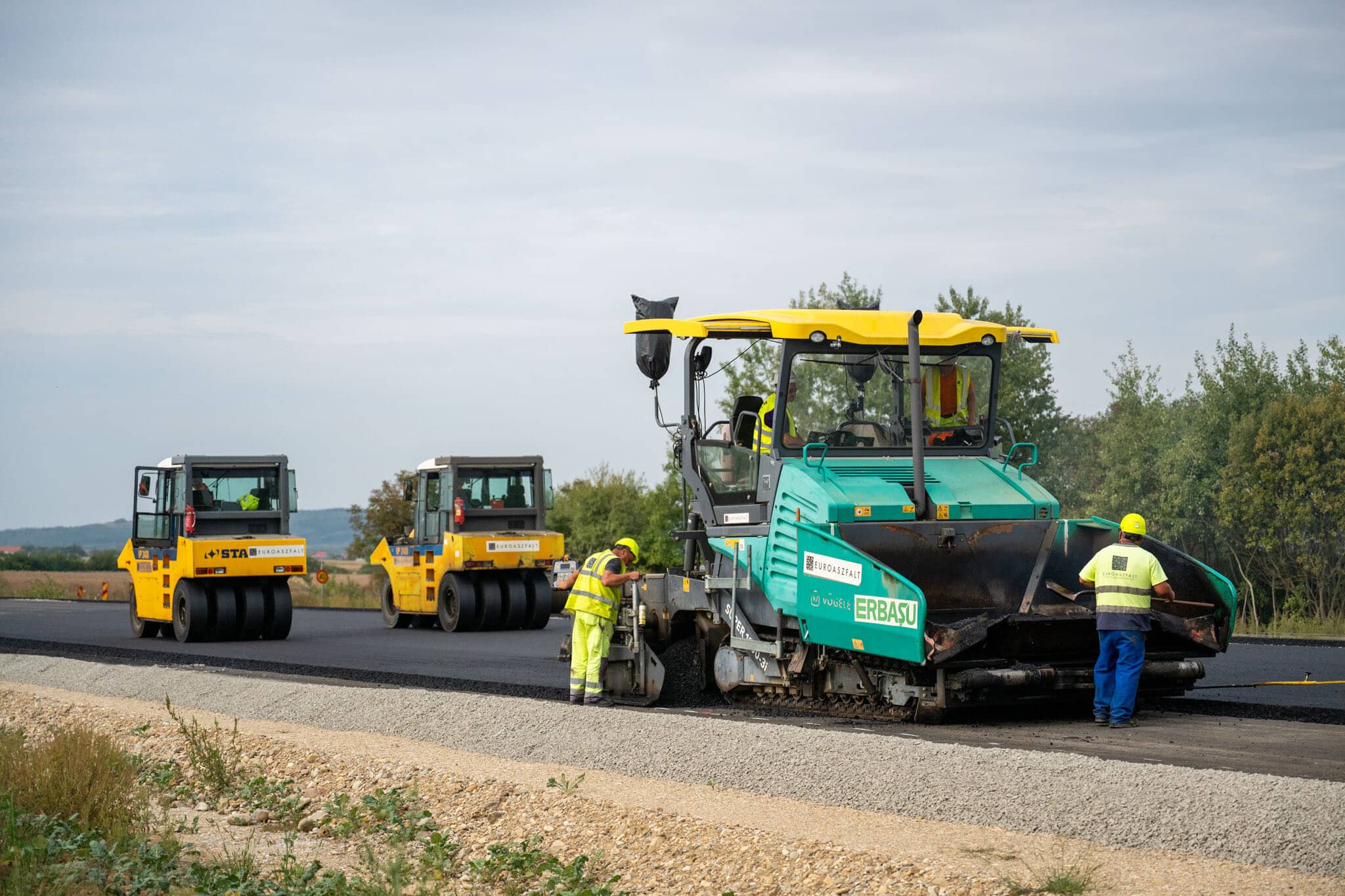
During the discussion, the four company directors unanimously emphasised that,
that Erbasu has been working alongside Metal Hammer Bau, a Transylvanian Hungarian construction firm, for many years, and that it has placed its trust in a Hungarian road-building consortium. In their view, this points to exemplary Romanian-Hungarian cooperation that transcends national prejudices, and in which professional and human considerations prevail over politics.
A viaduct nearly two kilometres long has also been completed as part of the unfinished construction project
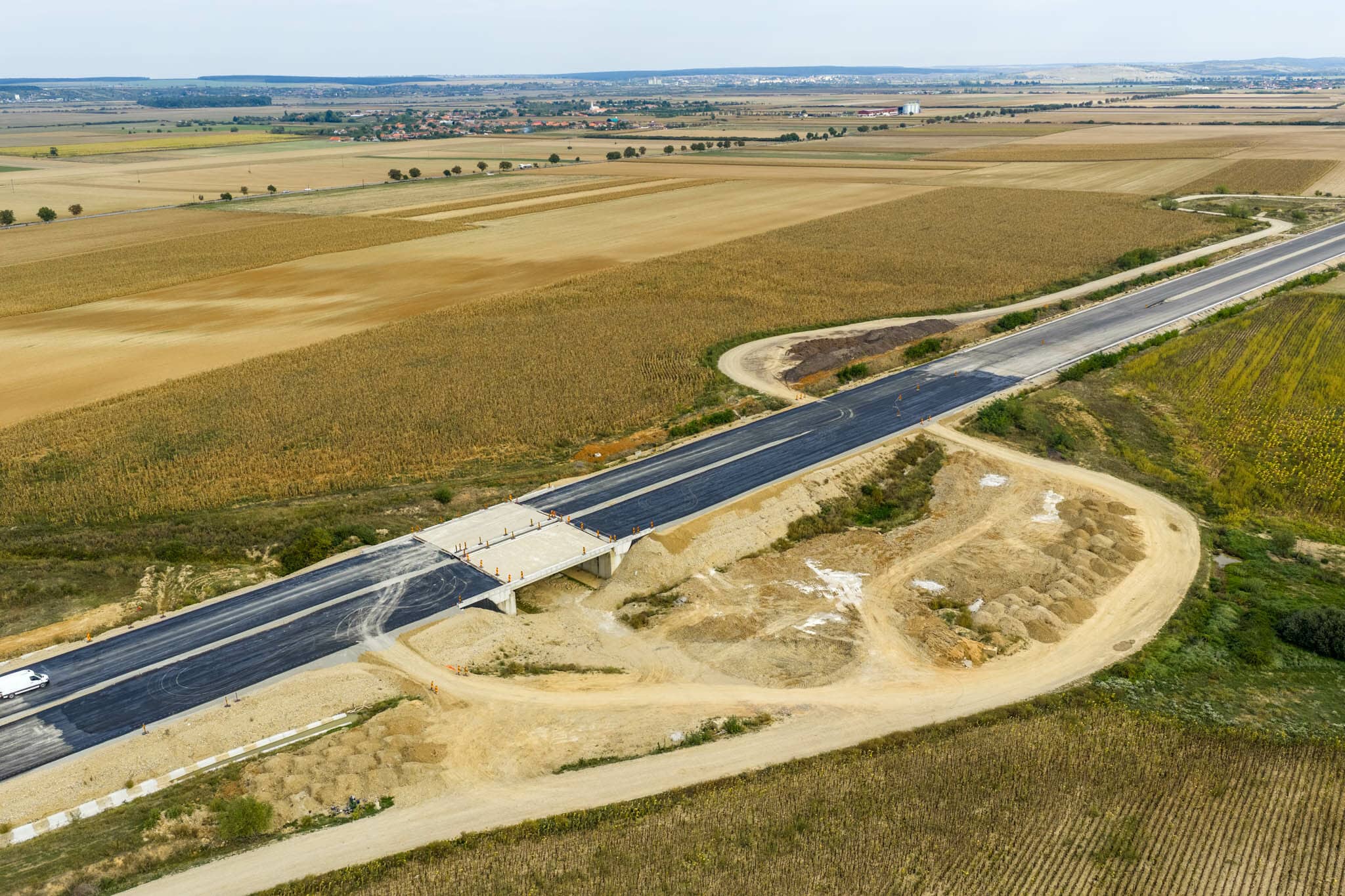
As we reported in our 2016 article our 2016 article highlighting previous anomalies in Romanian motorway construction, the American contractor Bechtel withdrew from the motorway section under construction in the Oradea area whilst work was still in progress. Accordingly, earthworks had already been completed on roughly half of the 26.35 km stretch by the early 2010s.
During the project, Erbasu will supply the materials required for the work carried out by Hungarian companies, including through the asphalt mixing plant set up in Oradea.
It is important to note that when the project began a decade and a half ago, all access roads and all intermediate storage areas had already been completed, so the organisational infrastructure for the road construction was in place. Furthermore, the entire quantity of crushed stone required for asphalting had been stockpiled, and it has remained there ever since, as has the stone material needed for stabilisation.
The main contractor set up the asphalt mixing plant at this site.
Another interesting fact is that nearly 100 per cent of the bridge components have been manufactured, and an 1,800-metre viaduct was also completed as part of the abandoned project. Incidentally, Erbasu commissioned a full survey of the condition of the unfinished motorway, and the plans were drawn up on this basis, which were accepted by the Romanian state infrastructure development company (CNAIR) as the client.
It is hoped that this project will serve as a basis for further collaboration
Based on their experiences with the project, which began in 2025, the four company directors reported on the exemplary cooperation between the Romanian general contractor and the Hungarian companies. What is more, the parties involved in the development do not wish to collaborate solely on this one project: they have already begun negotiations on another motorway project, for which Erbașu is also a contender.

They added that this is particularly significant because the current expansion is expected to continue, given that the Romanian government is able to utilise substantial EU funds for infrastructure development. The parties also mentioned that, in future, they intend to compete on the international stage as part of a joint consortium.
EuroAszfalt has carried out projects of national significance
To shed light on the background to the development, we asked all four company directors to outline the strategic significance of the project. Speaking on behalf of EuroAszfalt, Managing Director Attila Bakó emphasised that the successful construction of the Romanian motorway could lead to new contracts.
“We would like to enter a new market and demonstrate what we are capable of there. And if this current project proves fruitful for both parties, we would like to establish a presence and grow in this market – whilst, of course, maintaining our domestic production.”
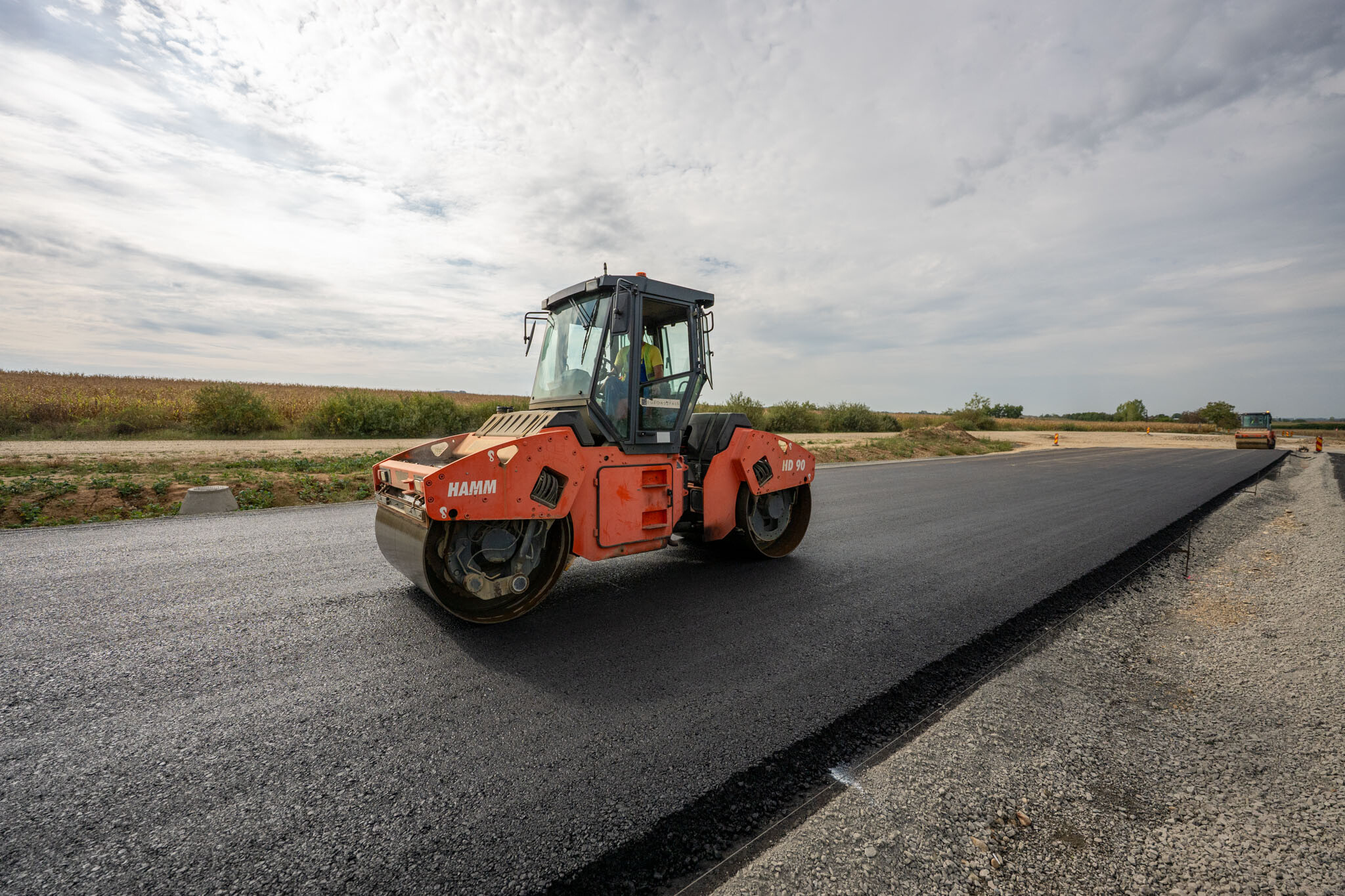
He added that the company has been a leading player in the Hungarian construction industry for several decades and has played a significant role in the development of the country’s road network. During the most recent expansion of the domestic road-building sector in the 2010s, it acted as a main contractor on projects including
- the M30 motorway, which is being upgraded to four lanes to link Miskolc and Košice;
- Main Road 21, which provides a motorway link to Salgótarján;
- the M70 motorway, which runs to the Slovenian border;
- the Tiszakürt–Kondoros section, which was built as the longest motorway section of the M44;
- or the Üllő–Albertirsa section, which marks the start of the M4 motorway upgrade.
It is very important that they are able to think in both Romanian and Hungarian
According to Albert Bau, it was their market knowledge and long-standing relationship that gave rise to the idea of involving EuroAszfaltot – a high-calibre specialist contractor based in Hungary – in the collaboration, the company’s managing director revealed. Albert Szilárd said that he has been working in the Romanian and Hungarian markets for more than 20 years and has extensive experience with both Romanian and Hungarian companies.
“I have been fortunate enough to learn both the Romanian and Hungarian approaches to road construction,” he said. „So I don’t just know the Romanian and Hungarian languages; I can also think in Romanian and Hungarian.”

He emphasised that the experience described above had played a significant role in helping them find the right professional partners and establish the necessary dialogue for the crucial motorway development project currently underway in Bihor. „From our perspective, the greatest added value we bring to the project is this knowledge and our network of contacts.”
That’s how much it’s worth when a company manages to build trust
The head of the Brașov-based Metal Hammer Bau made a similar point, noting that they are bringing Romanian relationship capital to the project. “We have been working with Erbașu for a long time on building and civil engineering projects,” revealed Attila Tímár. He added that they are currently working together on the construction of a 15,000-square-metre hospital in Oradea.
He mentioned, as a point of interest, that given the strong performance of the EuroAszfalt, Erbașu had also asked Metal Hammer Bau to seek out specialist Hungarian firms to carry out the work on the ventilated façade for the hospital project.

He also mentioned that the Transylvanian company benefits from the support of MHB Bulding Hungary Kft., a Budapest-based company belonging to the same group, which operates as a Hungarian entity. “In line with our strategy, we bid for projects in Romania through this company, and we manage the finances and organisation of the projects via this company,” explained Attila Tímár.
Kelet-Út joined the consortium with a wealth of international experience
The head of the Nyíregyháza-based Kelet-Út Kft. emphasised that the project is running smoothly from both a professional and interpersonal perspective. Csaba Vincziczki also noted that his company had previously collaborated with EuroAszfalt on numerous projects, whilst also possessing significant international experience.
„We were already working in Bulgaria back in 2011, and we handed over our most recent project there last year,” said the managing director. „We are also currently working in Slovakia and the Czech Republic.”
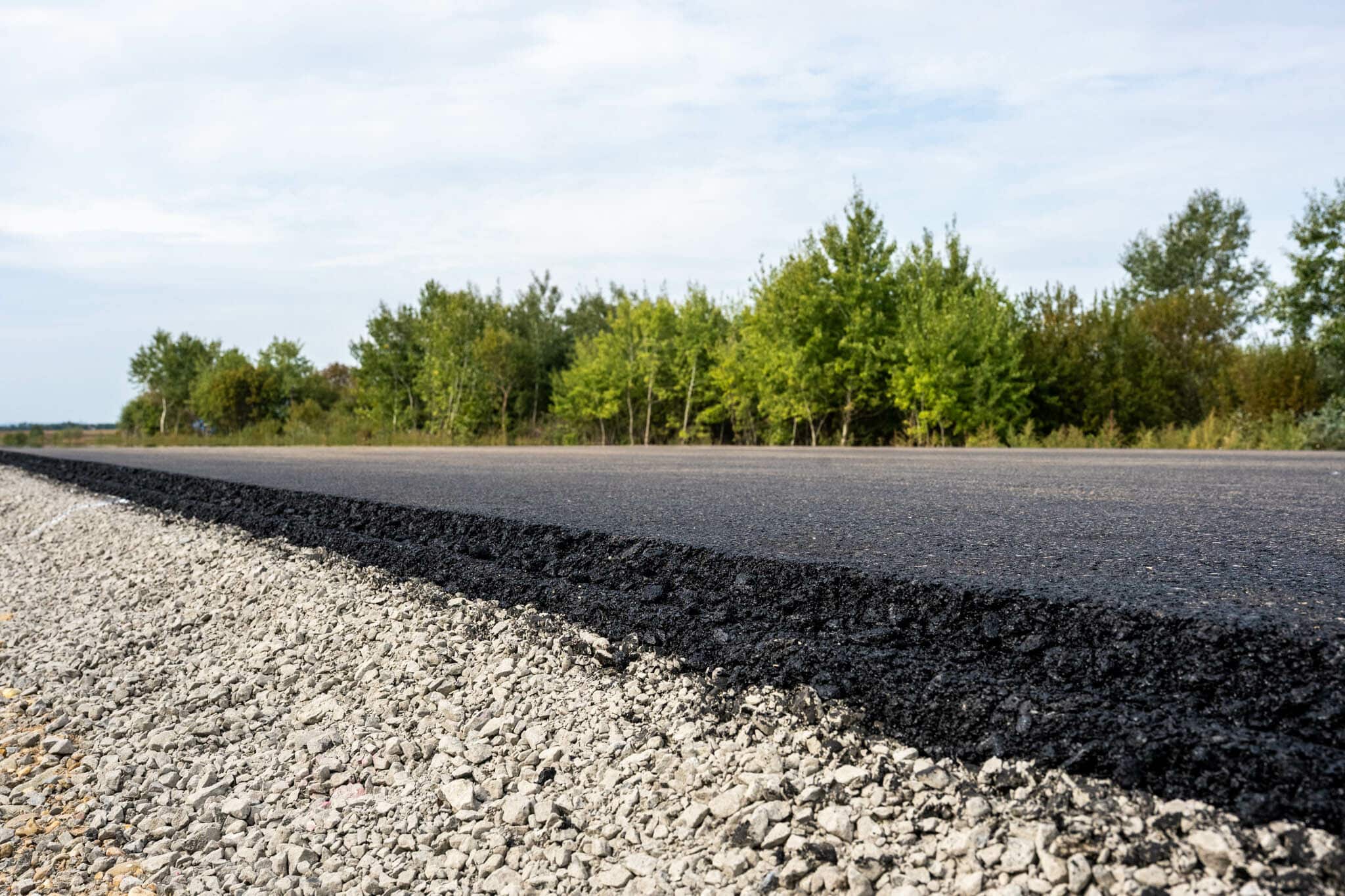
Nevertheless, the Romanian market is not entirely unfamiliar to them, as they had already worked on a road development project there in the late 1990s.
Source: Link









One of Abony’s most important transport routes is to be redesigned

This is how flash floods on the vineyard-covered hills in the Pécs conurbation are being prevented

Order has been restored: production of the new Közlekedési Múzeum can now go ahead as originally planned

We took a look at how the refurbished Igazságügyi palota building turned out

Four new bridges to be built in the heart of the former industrial city

Rain gardens are coming to Budafok, with over 3,000 square metres of green space set to be developed

Contemporary art deco in Csopakon

Safer driving on the motorways: new digital signs for the MKIF
-

 Current at 2026. 09. 09.
A first-hand look at a career in engineering – Duna Group Szabadegyetem is back
-
Climate-X 2026. 09. 09.
Nyíregyháza Spartacus FC goes green – four hundred solar panels to be installed on the stadium roof
-
Bound track 2026. 09. 15.
Nearly 50,000 people travel on it every day – the refurbishment of the Cegléd main line continues
-
Current at 2026. 09. 09.
Rental flats, Rákosrendező, decentralisation – important ideas were put forward on the Real Estate Beach Conference stage