Road building
Extra load – STRABAG is testing its new road-construction solutions under mining traffic conditions

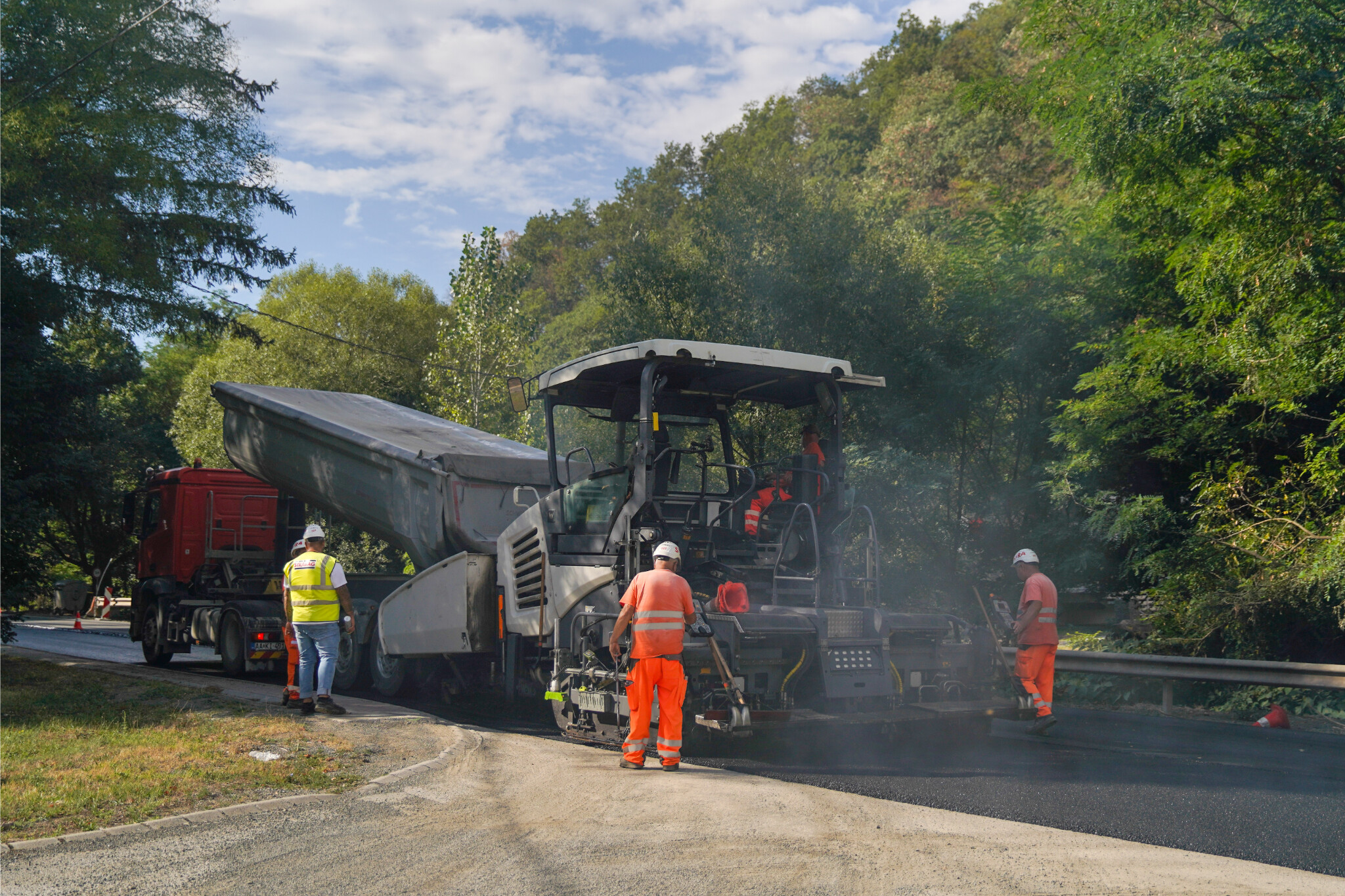
Experts are testing three development approaches at the roxit andesite mine in Komló. In July, staff from the operational division of STRABAG in Pécs, utilising the research and development findings of the group’s construction competence centre, TPA HU Kft., constructed test sections on the access road, which carries a significant volume of mining traffic.
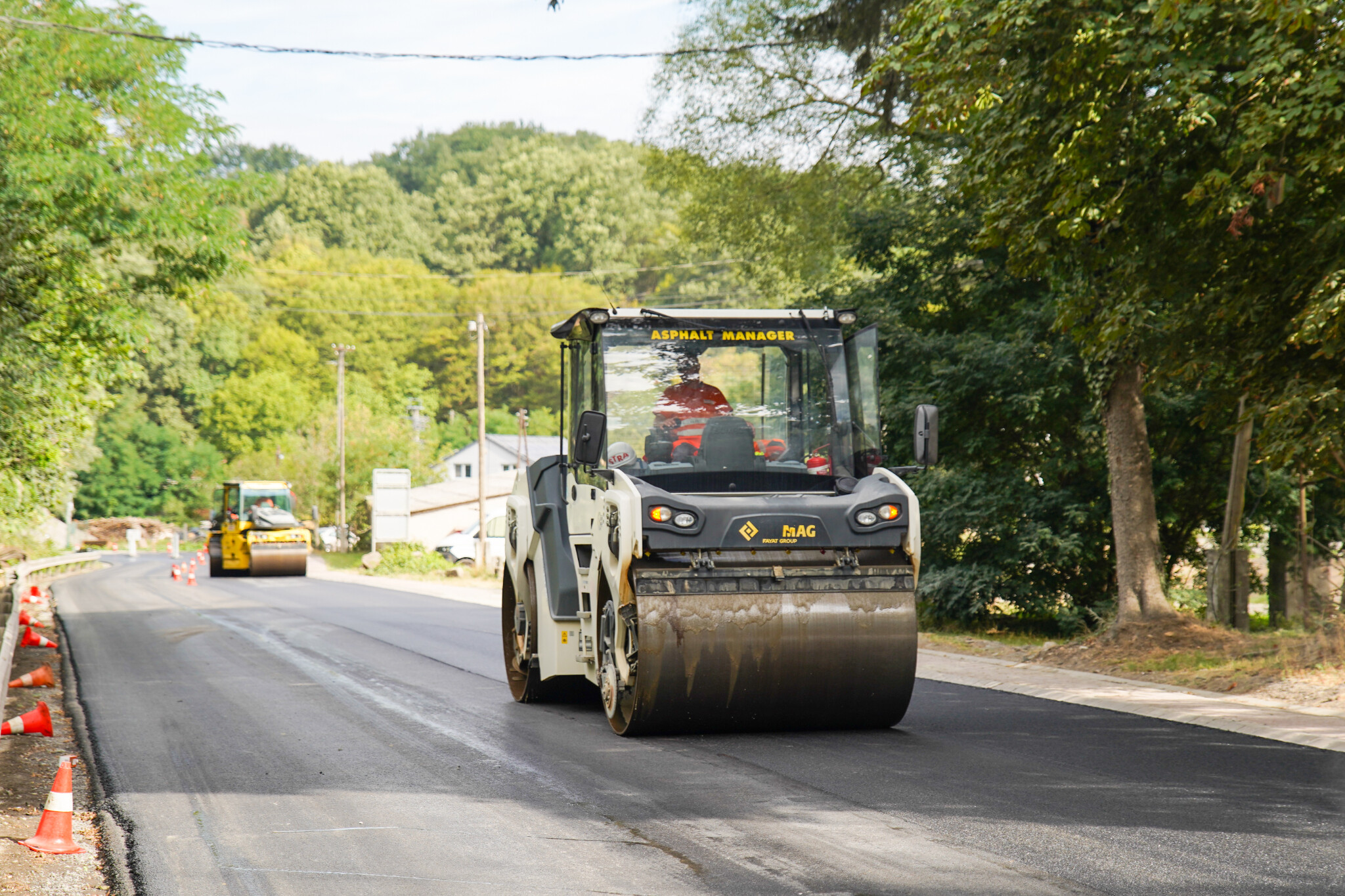
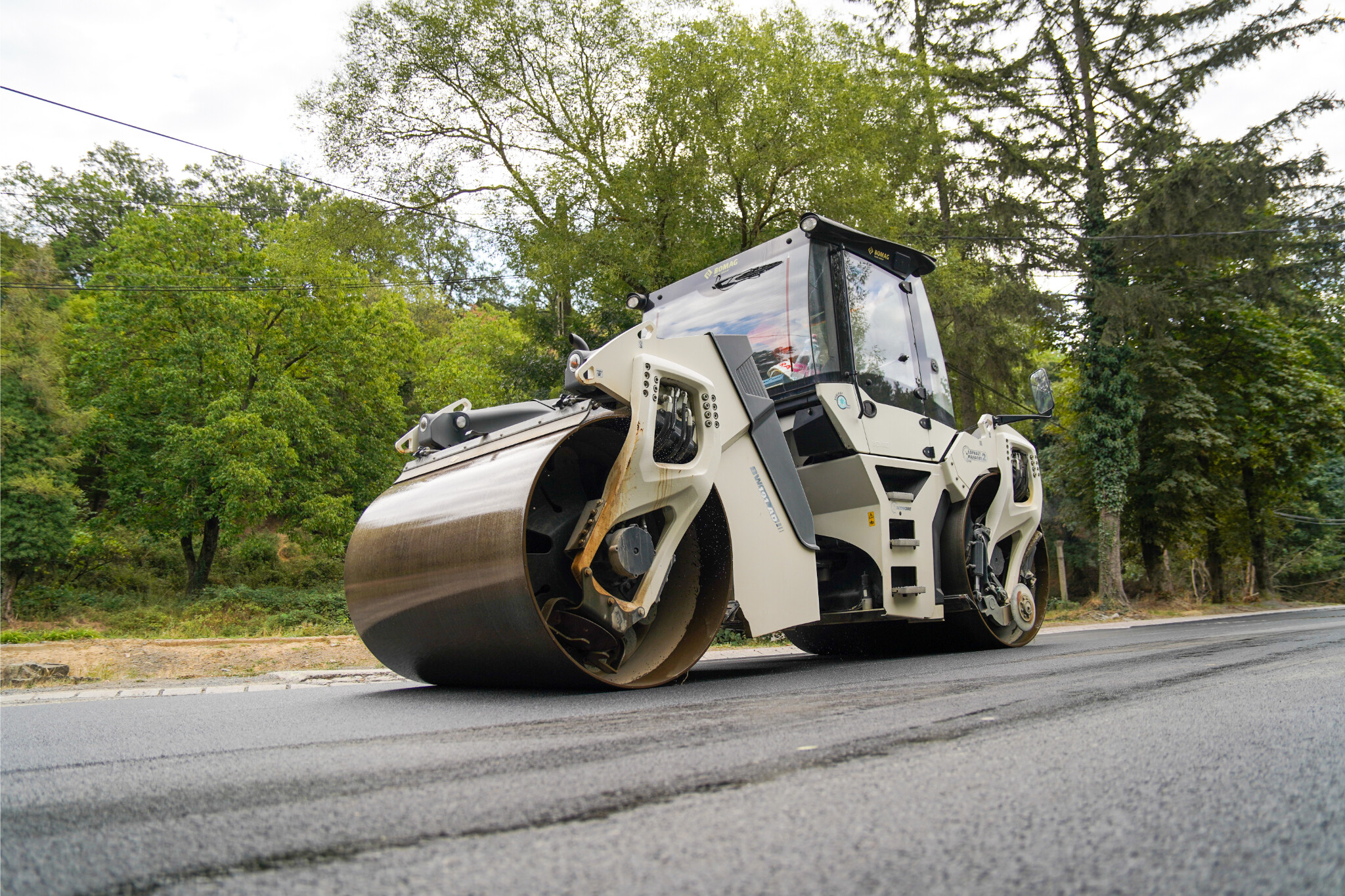
In each section, the application of lignin in the asphalt industry, the use of rubber-bitumen binders and the properties of hydraulically bound fibre-reinforced base courses are being investigated. The construction of the road section leading to the Komló mine provided an opportunity to test these developments under real-world construction conditions and to assess the workability of the mixtures. In the coming period, the behaviour of the installed materials and layers under sustained traffic loads will be monitored.
They can monitor the condition of the surface under known loads
A section of road with significant heavy goods vehicle traffic was selected for the trial, whilst the load could be well controlled, measured and was known. This is an important starting point for assessing changes in the condition of the road structure in conjunction with the load applied.
A key consideration was that the road in Komló is not a public highway, meaning that the necessary tests and measurements can be carried out without disrupting public traffic. In addition to the trial sections, a reference section was also constructed using conventional technology as part of the project, providing a basis for comparison for the experts.
Synthetic fibres would be used to limit cracks in the base layer
The staff at TPA have developed Ckt-4 and Ckt-12 base layers, reinforced with synthetic fibres dispersed throughout the mixture and hydraulically bound, for long-life track structures. The synthetic fibres dispersed throughout the mixture are designed to limit the propagation of cracks forming within the hydraulically bound layer. The aim is to extend the service life of roads by slowing down damage processes and delaying structural deterioration. A further aim is to reduce the risk of reflection cracking, i.e. the phenomenon whereby cracks in the base course appear in the layers above it.
The test sections were constructed using different base courses. The layer sequence for the two test sections is as follows:
- 4 cm SMA 11 (mI) PmB 25/55–65 wearing course
- 9 cm AC 22 binder (mF) PmB 25/55–65 binder course
- 6 cm AC 16 binder (mF) GmB 45/80-55 AF fatigue-resistant base layer
- 20 cm fibre-reinforced C12 lean concrete base course (without stress relief)
or:
- 4 cm SMA 11 (mI) PmB 25/55–65 wearing course
- 9 cm AC 22 binder (mF) PmB 25/55–65 binder course
- 6 cm AC 16 binder (mF) GmB 45/80-55 AF fatigue-resistant base layer
- 20 cm fibre-reinforced CKt-4 hydraulic base course (without stress relief)
During long-term monitoring of the two variants, they will also be able to examine the combined behaviour of the fibre-reinforced base layers and the asphalt layers laid on top of them.
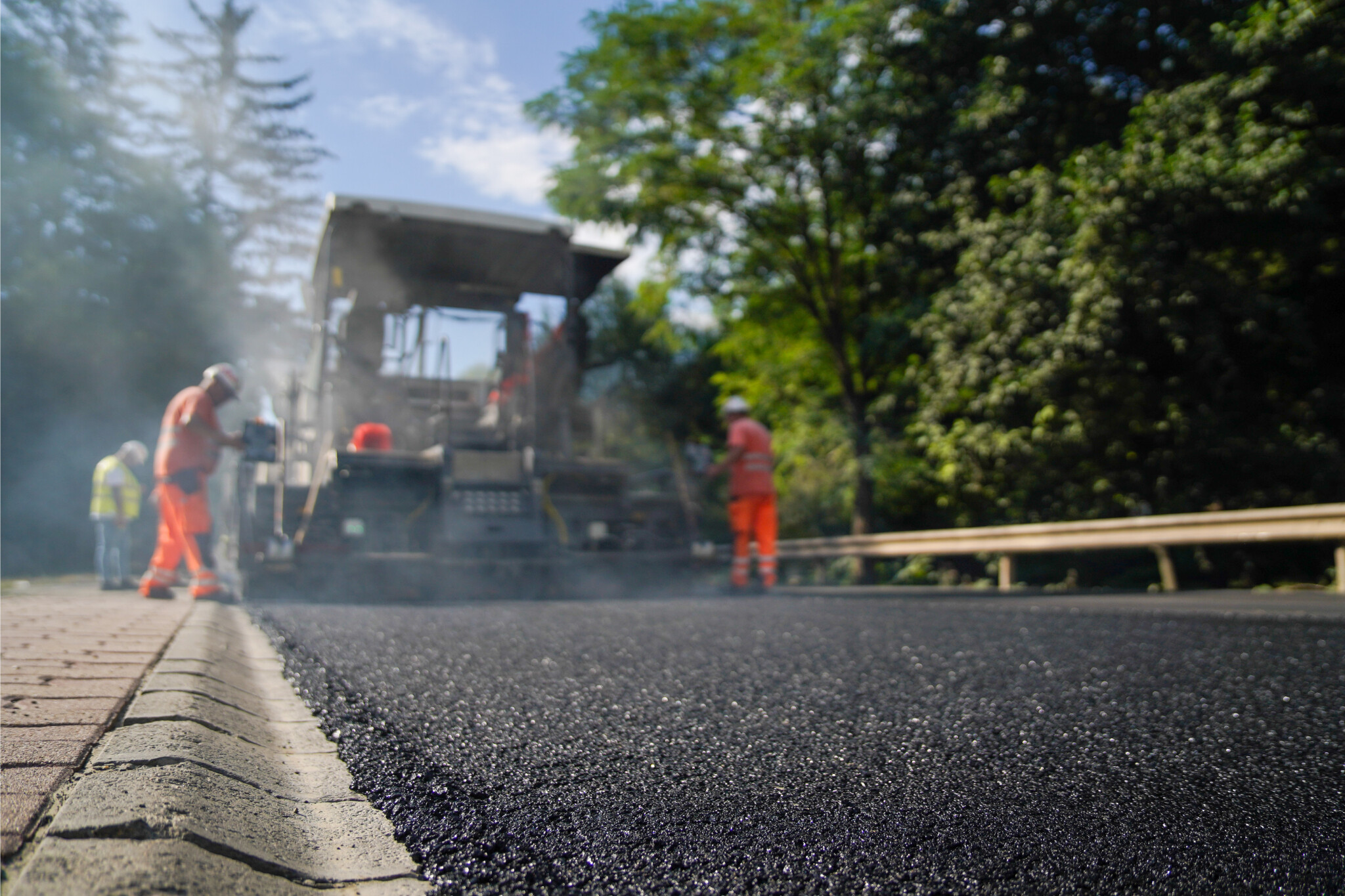
By-products from the paper and timber industries have also been incorporated into the asphalt
The second area of development is the practical application of asphalt mixtures produced with lignin as an additive. Lignin is a naturally occurring biopolymer binder with a high carbon sequestration capacity. It is available in large quantities as a by-product of the paper and timber industries. Its use is justified not only by its technical properties but also by the potential to reduce the carbon footprint of asphalt production.
According to the TPA report, in addition to the physical bond between lignin and bitumen, a chemical interaction also occurs, primarily with the asphalt and resin components of the bitumen. This interaction can reduce the water sensitivity of the asphalt, improve the adhesion of the bitumen, delay oxidative ageing, and have a beneficial effect on the mechanical behaviour of the asphalt mixture.
Mixtures of lignin were used to reinforce the existing track structure. Following 4-centimetre-deep milling, two new layers were laid:
- 4 cm AC 11 wear layer (mF) PmB 45/80-65 + lignin wear layer;
- 5 cm AC 16 binder (mF) PmB 45/80-65 + lignin binder layer
Lignin’s sensitivity to temperature also determined the production process: the blended mixtures were produced using a moderately heated process.
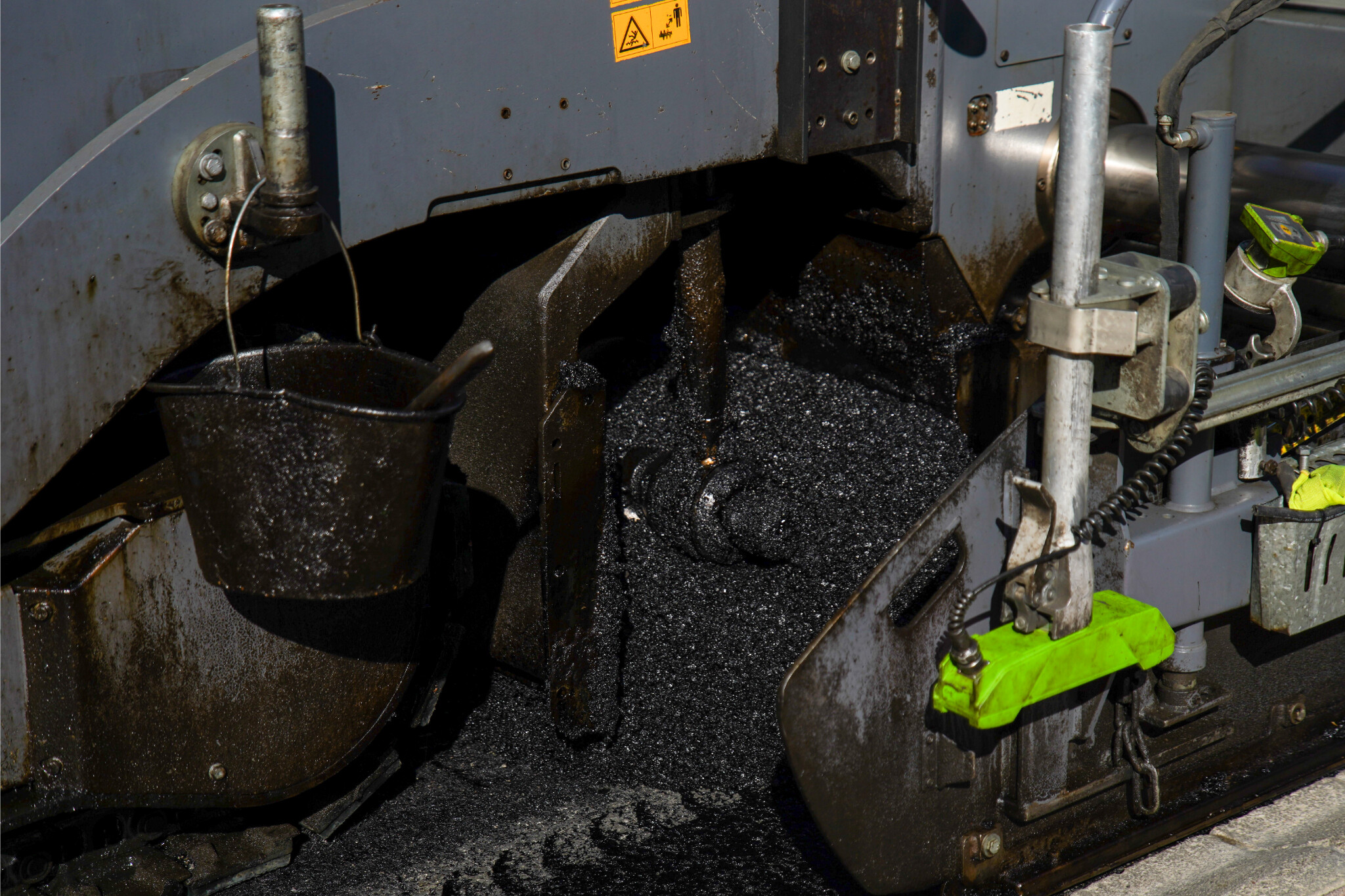
The rubber-bitumen layers are being examined on a curved section
In the third experimental solution, all the asphalt layers of the road structure were constructed using a mixture produced with GmB rubber-bituminous binder. The choice of site was particularly important here: the technology was applied on a curved section of road subjected to heavy loads and significant shear forces.
The aim was to utilise and validate the favourable properties of rubber-modified bitumen under conditions where heavy goods vehicle traffic places increased demands on the road surface.
The track structure used:
- 4 cm AC 11 wearing course (mF) GmB 45/80-55 wearing course layer;
- 7 cm AC 22 binder (mF) GmB 45/80-55 binder course;
- 8 cm AC 22 binder (mF) GmB 45/80-55 binder course;
- 20 cm Ckt-4 hydraulic sub-base, with stress relief
Development and sustainability in the STRABAG research and development programme
The construction of the pilot sections in Komló can be regarded as the first step in the practical testing of the developments. During construction, experience was also gained regarding installability. However, long-term condition monitoring is required to assess durability and behaviour under load.
The project forms part of the STRABAG research and development programme, which is based on practical application and places particular emphasis on solutions that promote sustainability, alongside technological developments. From time to time, we can report on the development achievements of the STRABAG group. A previous example was the roxit (formerly Bitunova) rejuvenator technology, which represents a pioneering solution in road surface maintenance. By improving the properties of aged bitumen, the technology can extend the service life of asphalt pavements, thereby delaying the need for complete resurfacing. The company’s experts, working as part of a consortium, have played a significant role in developing digital solutions to support the construction of linear infrastructure.
Source: Link





Extra load – STRABAG is testing its new road-construction solutions under mining traffic conditions

It’s time to provide information to those in the sector – that’s what this year’s Építőipar Summit was all about

A consortium comprising STRABAG and Duna Aszfalt has been awarded the contract to build the North Macedonian motorway

Nearly 880 tonnes of crushed stone are being moved on the 1-es vasútvonalon – track conditions are improving over a 600-metre stretch

Four new bridges to be built in the heart of the former industrial city

Rain gardens are coming to Budafok, with over 3,000 square metres of green space set to be developed

Contemporary art deco in Csopakon

Safer driving on the motorways: new digital signs for the MKIF
-

 Energy 2026. 09. 01.
Wind energy tenders are now open; technical compliance alone is not enough
-
What is being built? 2026. 09. 01.
There is good news regarding the Láng Negyed project – the investor has spoken out
-
Climate-X 2026. 09. 01.
A major US investment is boosting energy investment in Romania
-
Bound track 2026. 09. 01.
The SWIETELSKY Vasúttechnika Kft. has been declared the winner in two railway development projects