Water management
It’s time to provide information to those in the sector – that’s what this year’s Építőipar Summit was all about

The second Építőiar Summit has taken place, with ‘finding a way forward’ taking centre stage in both its key themes and discussions – though the participants also sought to send a message to the government during every discussion. In 2026, the conference focused on the following main areas:
- Orders, investments, EU funding – where is the market heading by 2027?
- What will happen to the 5% property tax after 2026 – will it remain the same or change?
- Can investment pick up again – or will the market continue to wait and see?
- Could there be a turnaround in housing construction and the rental market?
- What role will home renovation and energy efficiency programmes play?
- How are AI and digitalisation transforming operations and customer acquisition?
From among these topics, we have highlighted two discussions which are representative of the speakers’ sentiments and expectations.
Survival or a competitive edge? Decisions that are shaping the future of construction companies right now
Tibor Dávid (chairman of Masterplast Nyrt.), Attila Gódi (managing director of Terrán Tetőcserép Gyártó Kft.) and Tamás Kovács (chairman of Szabadics Építőipari Zrt.) discussed the challenges facing the sector, with Péter Gangel, founder of Bizalmi Kör, acting as moderator. The participants agreed that the various segments of the sector are experiencing different cycles, whilst political and economic uncertainties, a high interest rate environment and a drastic decline in investment in public utilities and the new-build housing market are placing general pressure on companies. The players see the key to survival and stability in improving internal efficiency, strengthening their presence in foreign markets, diversification and rapid decision-making structures, whilst they are bracing themselves for a significant downturn following the current demand for insulation materials, due to a decline in their order books.
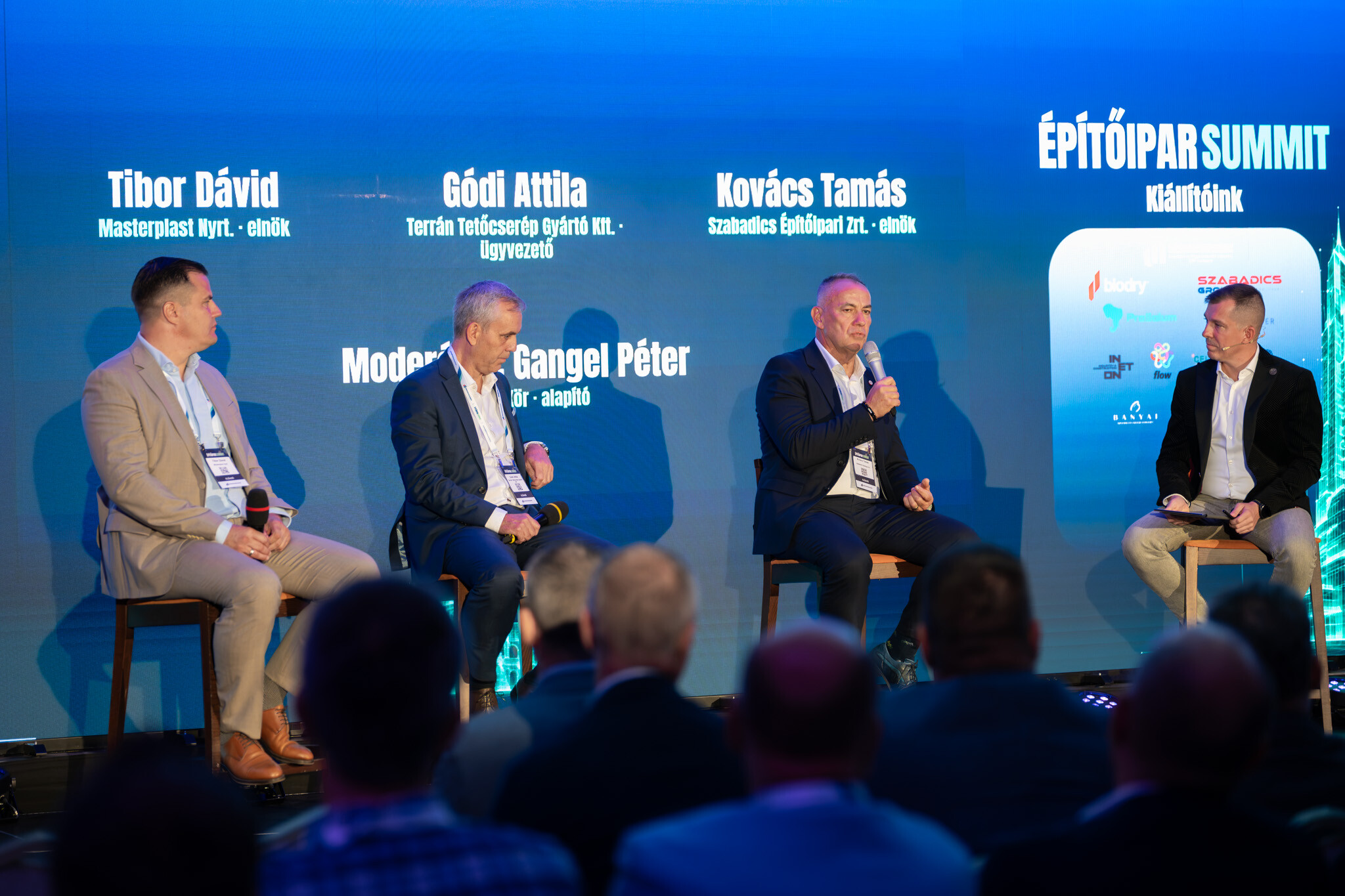
„Companies,” added Tamás Kovács, “are now trying to make the most of every opportunity that can secure their livelihood, whilst at the same time we are trying to improve our internal processes (whether using BIM or AI solutions) so that we are well prepared when we can finally move forward.
We know of a whole host of agri-industrial grant applications that have been under consideration for a year and a half. Alongside investments in irrigation development and livestock farming, the issue of reservoirs in the Dombvidék region also remains unresolved. Getting these projects off the ground could provide an immediate solution for the construction industry and make 2027 a more manageable year.”
With regard to strategies for managing the situation and ensuring the company’s long-term viability, Tamás Kovács described the company’s current defensive stance as follows: „I see a situation in the company’s operations akin to that in *The Stars of Eger*, where Dobó walks round before the siege to check that everything is in its place.” The experts emphasised that launching investment projects and agricultural grant schemes that are ready to go as soon as possible, implementing short-cycle energy renovation programmes, maintaining the reduced VAT rate for new homes, and establishing a 15–20-year state strategic plan would be essential for creating predictability and social well-being.

Where is the building materials market heading? Prices, trends and purchasing decisions in the coming period
An important panel discussion was held between Attila Juhász (owner of Piramis Építőház Kft.), Andor Komlós (managing director of Leier Hungária Kft.) and István Csúsz (business development director of INETON Kft.), with the discussion moderated by Dávid Tibor (chairman of Masterplast Nyrt.). The discussion centred on the slowdown in the building materials trade, the decline in stock levels, the tightening of contractor financing and the wait-and-see attitude among investors. The company executives highlighted that, in response to the fall in demand, the future may lie in expanding supply, establishing intermediary platforms, and the growing use of standardised and prefabricated components, which, despite long lead times, enable rapid and cost-effective implementation.
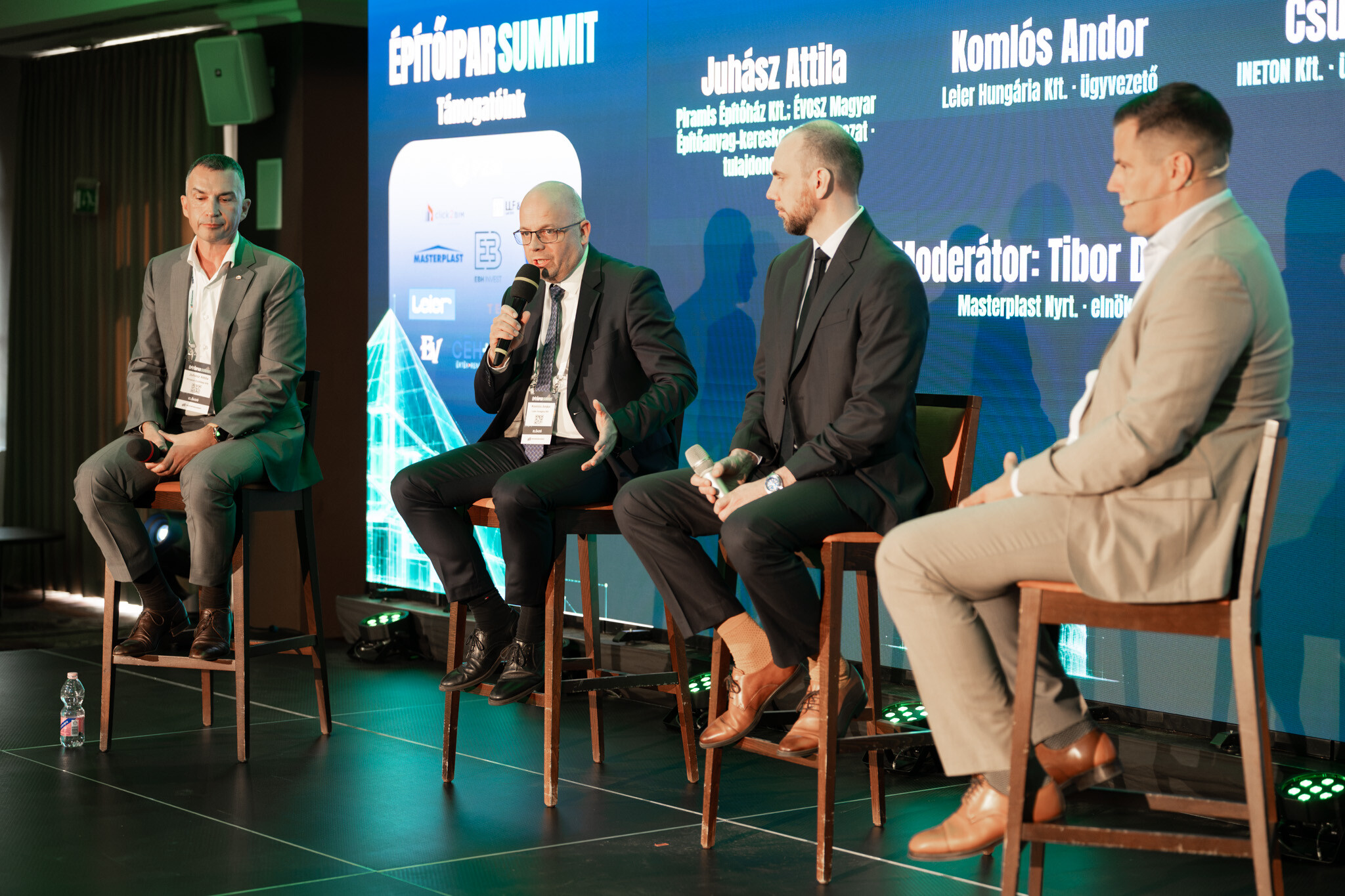
In light of the uncertainty surrounding market prospects and developments, Andor Komlós also sought to highlight potential long-term solutions:
„We are also using this quieter period to engage with secondary and higher education. We recognise that our product design and modular construction methods are unfamiliar to students. We invite students to our factory and show them how design, manufacturing and logistics work. We are confident that the coming years will bring significant efficiency gains, but to achieve this we will need those who are sitting in the school desks today.
At the same time, the tax environment is of vital importance even in the short term: „We hope – and many others hope – that the 5% VAT rate will remain in place, as if it were to be abolished, the already expensive flats would cost 21% more,” said the managing director of Leier. In summary, the parties called for clear guidance and dialogue from the government, emphasising that eliminating uncertainty, reviving renovation programmes, and supporting education and modern construction technologies are essential for balancing out cyclical fluctuations and retaining skilled professionals.
Source: Link

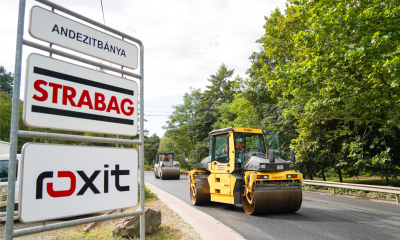

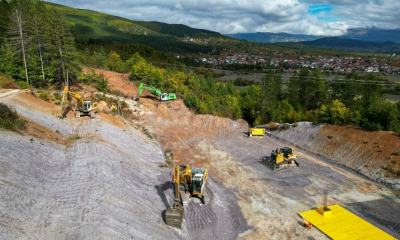


Extra load – STRABAG is testing its new road-construction solutions under mining traffic conditions

It’s time to provide information to those in the sector – that’s what this year’s Építőipar Summit was all about

A consortium comprising STRABAG and Duna Aszfalt has been awarded the contract to build the North Macedonian motorway

Nearly 880 tonnes of crushed stone are being moved on the 1-es vasútvonalon – track conditions are improving over a 600-metre stretch

Four new bridges to be built in the heart of the former industrial city

Rain gardens are coming to Budafok, with over 3,000 square metres of green space set to be developed

Contemporary art deco in Csopakon

Safer driving on the motorways: new digital signs for the MKIF
-

 Energy 2026. 09. 01.
Wind energy tenders are now open; technical compliance alone is not enough
-
What is being built? 2026. 09. 01.
There is good news regarding the Láng Negyed project – the investor has spoken out
-
Climate-X 2026. 09. 01.
A major US investment is boosting energy investment in Romania
-
Bound track 2026. 09. 01.
The SWIETELSKY Vasúttechnika Kft. has been declared the winner in two railway development projects