Water management
A big step towards maintaining a safe drinking water supply in the capital

The wells on Szentendre Island, Csepel Island and several areas along the Danube belonging to the capital city supply drinking water to millions of people, and most of them are now in need of renovation. The Penta Általános Építőipari Kft. and Colas Alterra Zrt. consortium, with a net value of HUF 19 billion, was completed on schedule at the end of October 2023, ensuring that Budapest's drinking water network wells can continue to operate safely for decades to come.
Our capital's drinking water is provided by the Danube, whose winding, pebbly bed is an excellent filter for the river's water - so much so that Budapest has some of the best tap water in the world. But the wells and pipelines that supply it are in need of renovation. Many of the pipes were still lead-lined metal pipes, the harmful effects of which have now been proven.

The agglomeration also benefits
The project has renovated 60 tap wells, with five new taps per well. The primary aim was to ensure the long-term water supply not only for Budapest but also for the agglomeration. Another important aspect was
- preventing the risks of climate change,
- adaptation to its effects,
- and to protect against the chemical and biological water quality problems that are expected as a result of the falling water level and rising water temperature in the Danube.
Almost 3,000 leaded pipes were also replaced with KPE pipes in the Fővárosi Vízművek Zrt. Budapest water supply network, ensuring good water quality in the long term by reducing the lead load.

Protecting our waters
In total, approximately six kilometres of DN400 - DN1200 GÖV water pressure pipes were laid (in districts XXI, XXII and XXIII), also to improve water quality and maintain security of supply. By replacing the oversized pipe sections with smaller diameter ones, the new pipes increase the flow rate, so that the water stays in the pipe for a shorter time, thus significantly reducing the risk of infection.
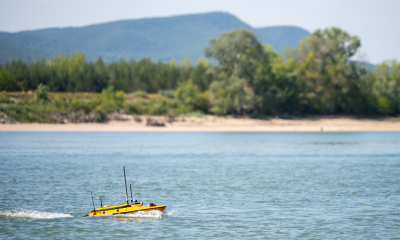
The project also included the installation of a DN1100 PE pipe under the Danube in Budafok, near Gyár street, starting from the Danube bank. The task was a major challenge, both in Hungary and in Europe: the 550-metre-long pipe train was created on site by welding 12-metre-long elements together, and then the huge pipe section was pulled into the Danube embankment pipe up to the receiving docks on Csepel Island.

Source : Link








The town centre on the banks of the Tisza is being regenerated

The Market has fulfilled its promise: it has delivered the 10,000 tonnes of natural stone offered for the raising of the bottom sill at Paks

The construction industry is both vast and marvellous – the Duna Group Szabadegyetem has been launched

ESG is now a business issue for suppliers in the construction industry too

Rain gardens are coming to Budafok, with over 3,000 square metres of green space set to be developed

Contemporary art deco in Csopakon

Four new bridges to be built in the heart of the former industrial city

Safer driving on the motorways: new digital signs for the MKIF
-

 Industry news 2026. 08. 18.
Students were introduced to the high-tech construction industry at BME’s field camp in Göd
-
Bound track 2026. 08. 17.
New pedestrian crossings and a junction with traffic lights are being built in Angyalföld
-
What is being built? 2026. 08. 18.
Hungary’s new McDonald’s restaurant has moved into a modernist listed building in the centre of Budapest
-
What is being built? 2026. 08. 18.
New paving, a playground and visitor facilities are being planned for the Várkör area in Pannonhalma