Water management
A 27-kilometre project deep inside an Alpine mountain – we visited the Semmering Tunnel
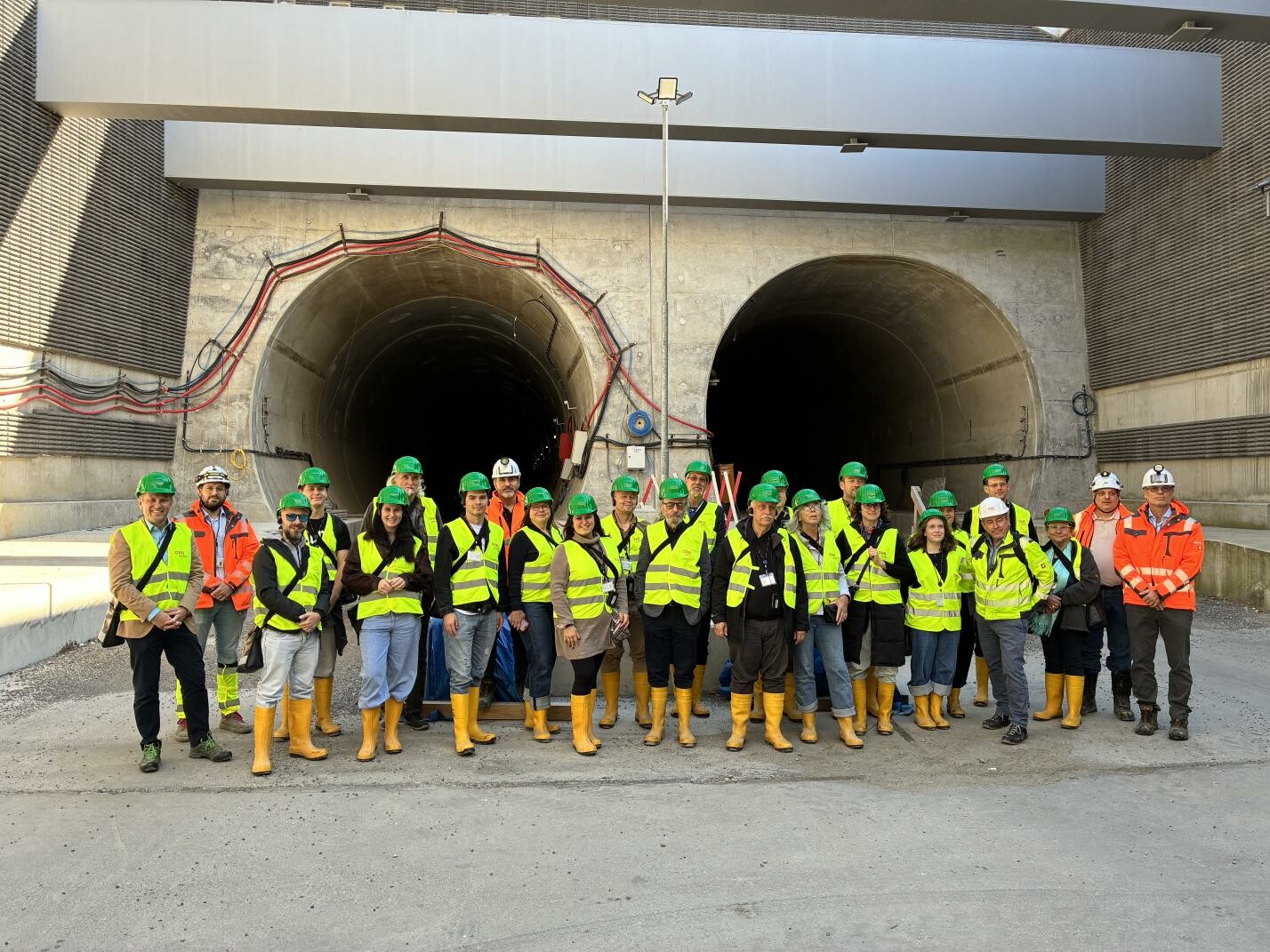
Anyone travelling by train in the Semmering area today is travelling along a railway line that is more than 170 years old.
The historic Semmeringbahn line opened in 1854 and has remained an important part of Austria’s rail network ever since. However, the mountainous route is steep and winding, making it less suitable for today’s passenger and freight traffic.
The Semmering-bázisalagút provides the answer. Between Gloggnitz and Mürzzuschlag, two single-track tunnel sections were built beneath the mountain. Whilst the maximum gradient on the historic line is around 25 per mille, the maximum in the new tunnel is 8.4 per mille.

This is primarily important for freight traffic, but passengers will also benefit from it. Once the entire rail development project in southern Austria is complete, the journey time between Vienna and Graz could be reduced from 2 hours 40 minutes to around 1 hour 50 minutes, according to calculations by the Austrian railway company (ÖBB).
On the new section, trains will be able to travel at speeds of up to 230 km/h, meaning that rail could become a genuine alternative to travelling by car. The environment stands to benefit too: transporting one tonne of goods by rail results in roughly thirty times fewer carbon dioxide emissions than by lorry.
They drilled, blasted and dug
Construction of the 27.3-kilometre tunnel began in 2012 and was divided into three major sections. Due to the varied geological conditions, a range of methods were employed.
One of the distinctive features of the central section, known as Fröschnitzgraben, is that the work areas were accessed via two vertical shafts, each approximately 400 metres deep. The tunnel-boring machines also set off from the underground work area at the bottom of the shafts, heading towards Gloggnitz.
This is one of the most spectacular engineering solutions of the project: rather than setting the machines to work on the mountainside, they were lowered in parts to a depth of 400 metres and then assembled underground.
The two TBMs, or tunnel-boring machines, were each 120 metres long and weighed 1,750 tonnes. They were manufactured in France and then transported to the site in sections. The two machines worked for more than eight kilometres towards Gloggnitz; in the rest of the tunnel, conventional excavator-based and drill-and-blast methods were mainly used.
The construction of the Gloggnitz section was carried out by a consortium comprising Implenia, HOCHTIEF and Thyssen Schachtbau, whilst on the Fröschnitzgraben section, Implenia and SWIETELSKY Tunnelbau GmbH & Co KG worked together. The tunnel cross-section created by the TBMs was lined with precast reinforced concrete elements, known as tubings. The necessary elements were manufactured at the SWIETELSKY plant in Neunkirchen.
6.5 million cubic metres of rock were extracted from the mountain
During the construction work, 6.5 million cubic metres of material were excavated. Some of the excavated rock was deposited in the Longsgraben area, where work has since begun on restoring the site and reforesting the area.
According to data from ÖBB, 45,000 plants have been planted on site. Meanwhile, the condition of the water bodies in the vicinity of the project is being monitored at 430 measurement points, and supplementary water supplies have been established where necessary.
In 2024, they crossed the mountain
On 29 November 2024, the final breakthrough took place in the Gloggnitz area. This marked the completion of the two tunnel tubes, and the project entered a new phase.
In the summer of 2025, work began on the installation of the railway infrastructure and various technical systems. According to data from ÖBB for July 2026, 53 kilometres of the approximately 55 kilometres of internal concrete lining in the two tunnels had already been completed.
Work is currently underway on the track, cabling, power supply, communications and security systems. The technical tunnel fit-out is being carried out by a consortium comprising Rhomberg Sersa Rail Group and PORR. The contract is worth 176 million euros, and the same consortium has also been awarded the contract to construct the concrete-slab railway track, known as the Feste Fahrbahn.
High-tech solutions thanks to the Siemens
Of course, the tunnel is not only made up of rock and concrete, but also incorporates technology familiar from the industrial sector. To this end, Siemens supplies the control and remote control technology, the automation and protection systems, as well as the switchgear, in collaboration with ARGE Rhomberg Sersa Rail Group and PORR.
The tunnel’s central control system comprises 69 control cabinets, which automate cross-passages, cross-chambers and technical buildings, integrate some 25,000 hardware signals, and control everything centrally.
In the event of a fault, the affected section is quickly shut down
The system comprises the power supply, lighting, escape route indicator lights, ventilation, fire-extinguishing systems, water supply and drainage. The fibre-optic network operates without an external switch, using ring redundancy, so it does not shut down even in the event of a break. Remote control is protected by cyber-security solutions developed for critical transport infrastructure.
Austria is the first country to install so-called F-gas-free switchgear in a tunnel. The „Clean Air” insulating medium consists of nitrogen and oxygen, thus completely replacing fluorinated greenhouse gases. In the event of a fault, the protective relays quickly disconnect the affected section to prevent the entire tunnel section from failing. The central computer continuously monitors the operational status, enabling faults to be detected at an early stage.
In three years’ time, trains will be running on the new line
For those living in the Semmering area, the new tunnel means, first and foremost, better rail links. As well as faster passenger services, the gentler gradient also provides a more favourable route for freight traffic.
Meanwhile, the historic Semmeringbahn will also be retained: the project thus serves both to improve transport and to preserve the 170-year-old railway line. According to the plans, services on the Semmering-bázisalagút could commence at the end of 2029.
Source: Link






„It has reaffirmed that this is my path” – The 7th Duna Group Szabadegyetem has come to an end

Condominium grant schemes, a national knowledge centre, and reconstruction in Ukraine – forward-looking initiatives discussed at the ÉVOSZ board meeting

Four blocks, 254 flats: structural work on the Csepel apartment block is progressing using PERI systems

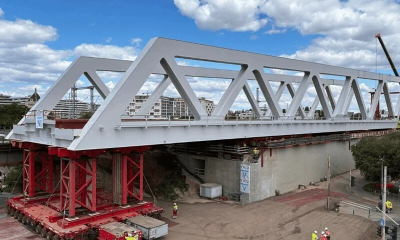
The technology used on the Déli Körvasút is being praised in the international press

Rain gardens are coming to Budafok, with over 3,000 square metres of green space set to be developed

Four new bridges to be built in the heart of the former industrial city

Contemporary art deco in Csopakon

Safer driving on the motorways: new digital signs for the MKIF
-

 Current at 2026. 08. 25.
Apples and pears: according to MKIF, no valid conclusions can be drawn about the operation of the M6 from technical parameters that are not comparable
-
Current at 2026. 08. 26.
Grab your tools – The large-scale workshow for builders and gardeners is about to begin
-
What is being built? 2026. 08. 25.
They haven’t skimped on the technical specifications: this is what the Insula Residential Park in Komárom will look like, featuring the Leier solutions
-
Current at 2026. 08. 23.
The Miskolc cave spa was completed in time for 20 August thanks to some ingenious solutions – a photo gallery and on-site report