Water management
Mester Street is being redeveloped in a confined space alongside tram traffic

Colas Közlekedésépítő Zrt. and Colas Magyarország Építőipari Zrt. are modernising the section of Mester Street between Ferenc Boulevard and Haller Street on behalf of Budapesti Közlekedési Központ. As well as resurfacing the road, the project will also reorganise the street’s traffic layout, providing more space for pedestrians, cyclists and greenery. As part of the Budapest City Council’s road renewal programme, the aim is to make the street quieter and ensure conditions for barrier-free access.
Experts from Colas provided our newspaper with details of the works, which cover an area of 19,000 square metres along an 816-metre stretch. Construction work has been underway since the handover of the site on 12 May, based on the plans drawn up by Create Value Kft. . The project is scheduled to be completed in the summer of 2027.
This project is one of those in which the local council of District IX and the relevant civil society organisations were involved in the preparatory work, and the requests of local residents were also taken into account.
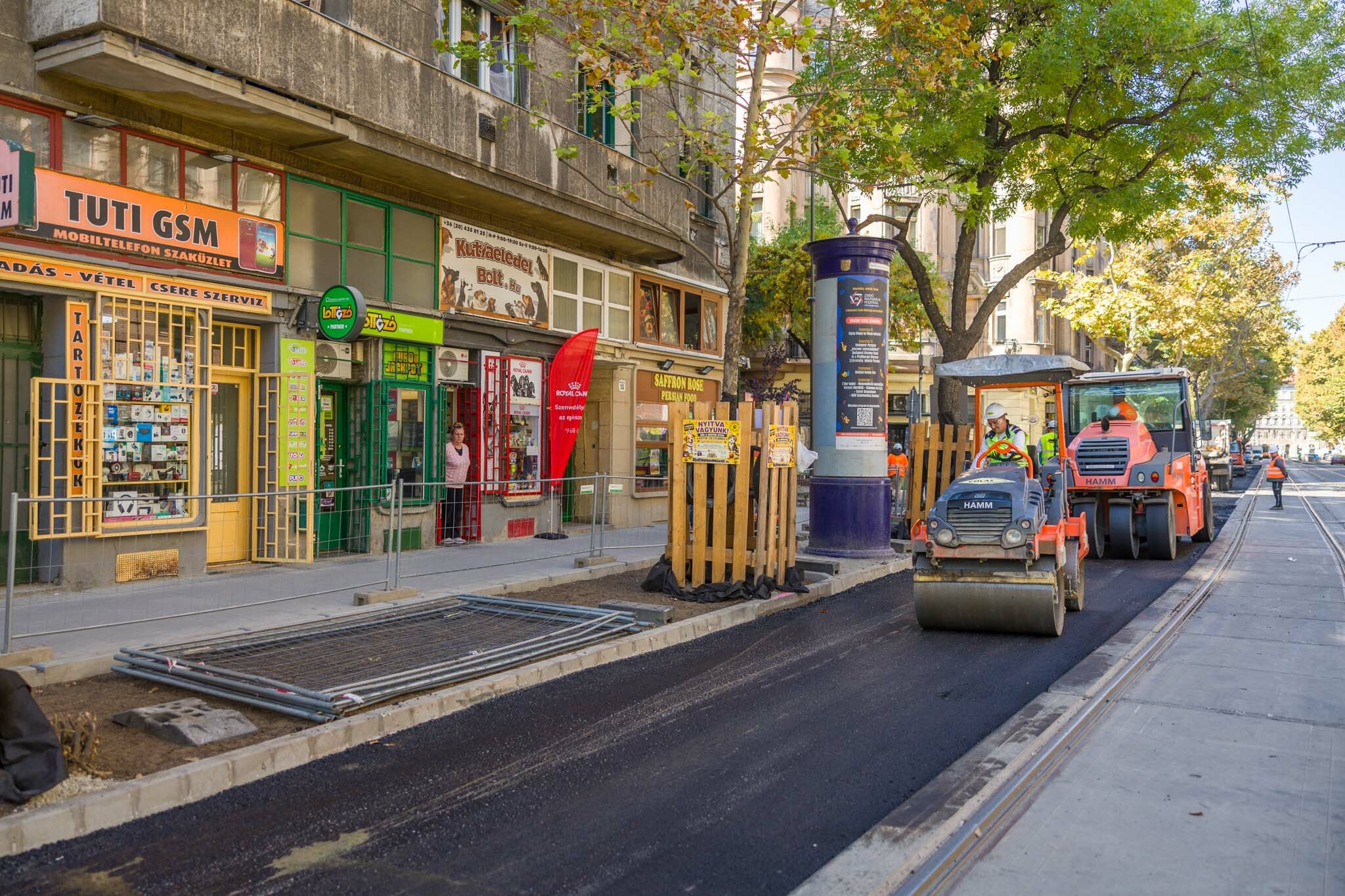
Terraces and loading bays – opportunities for growth for businesses operating in the area
Key elements of the project include the construction of new pedestrian crossings at the emergency stops for tram lines 51 and 51A, as well as at the junction of Mester Street and Thaly Kálmán Street, thereby facilitating safe access to the Szent István Technikum és Kollégium. A protected cycle path will be built, which will be partially separated from Liliom Street in the direction of Nagykörút and completely separated between Márton Street and Liliom Street. Green spaces will be expanded, and new Mobi points will also be established.
All the paving in the area affected by the works – covering approximately 19,000 square metres – will be renewed; areas will be created for local businesses where restaurants and cafés can set up new terraces, whilst designated centralised loading bays will be provided for shops. The reconstruction of the tram tracks is not part of the project, but the tram stops will be refurbished.
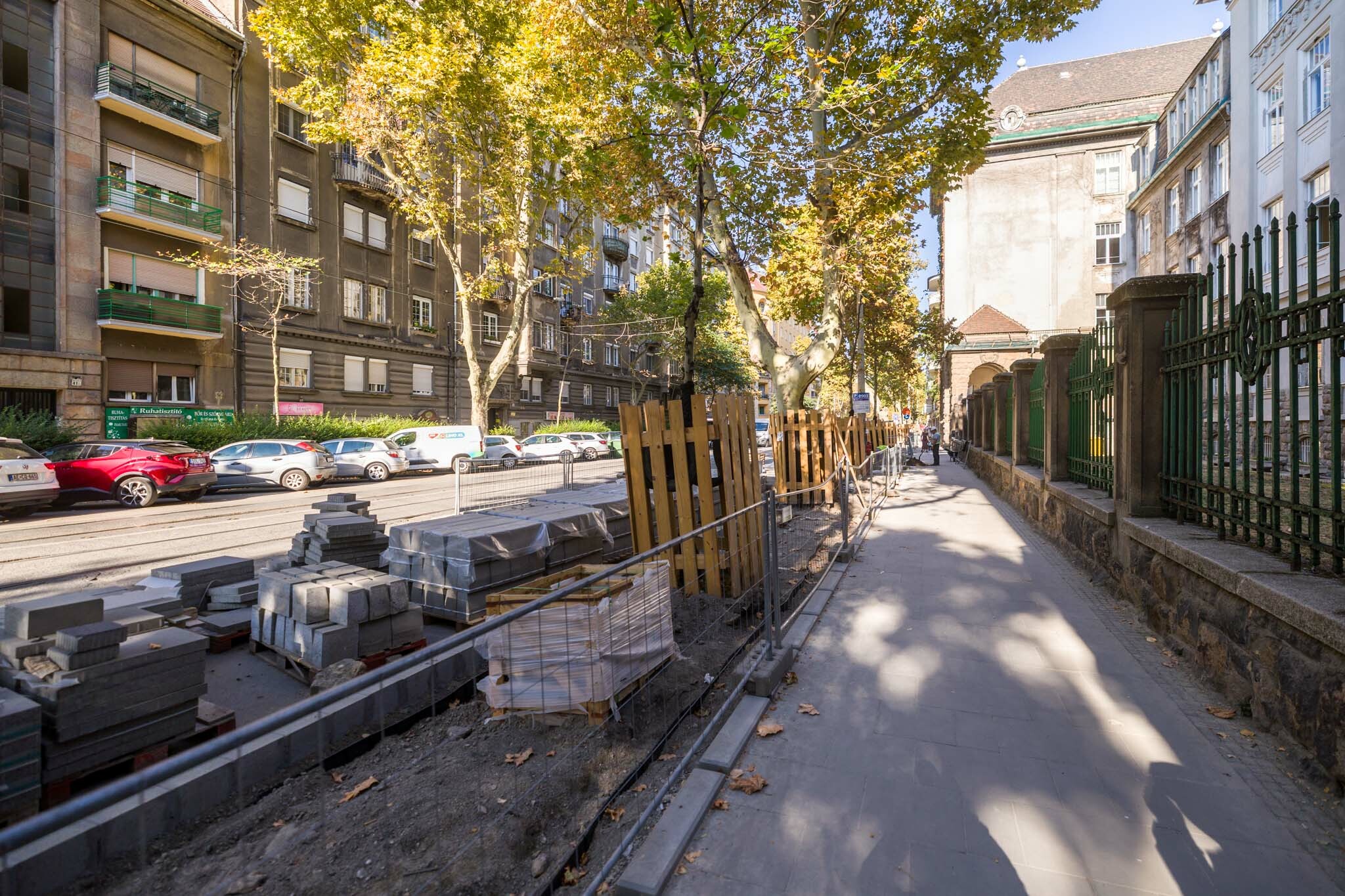
They use smaller machines in the confined workspace
Working in a congested urban environment is one of the project’s greatest challenges. Due to the nature of the worksite – including overhead cables, a dense network of utility lines and trees overhanging the road surface – large machinery cannot access the site, so smaller vehicles are being used to assist with the work.
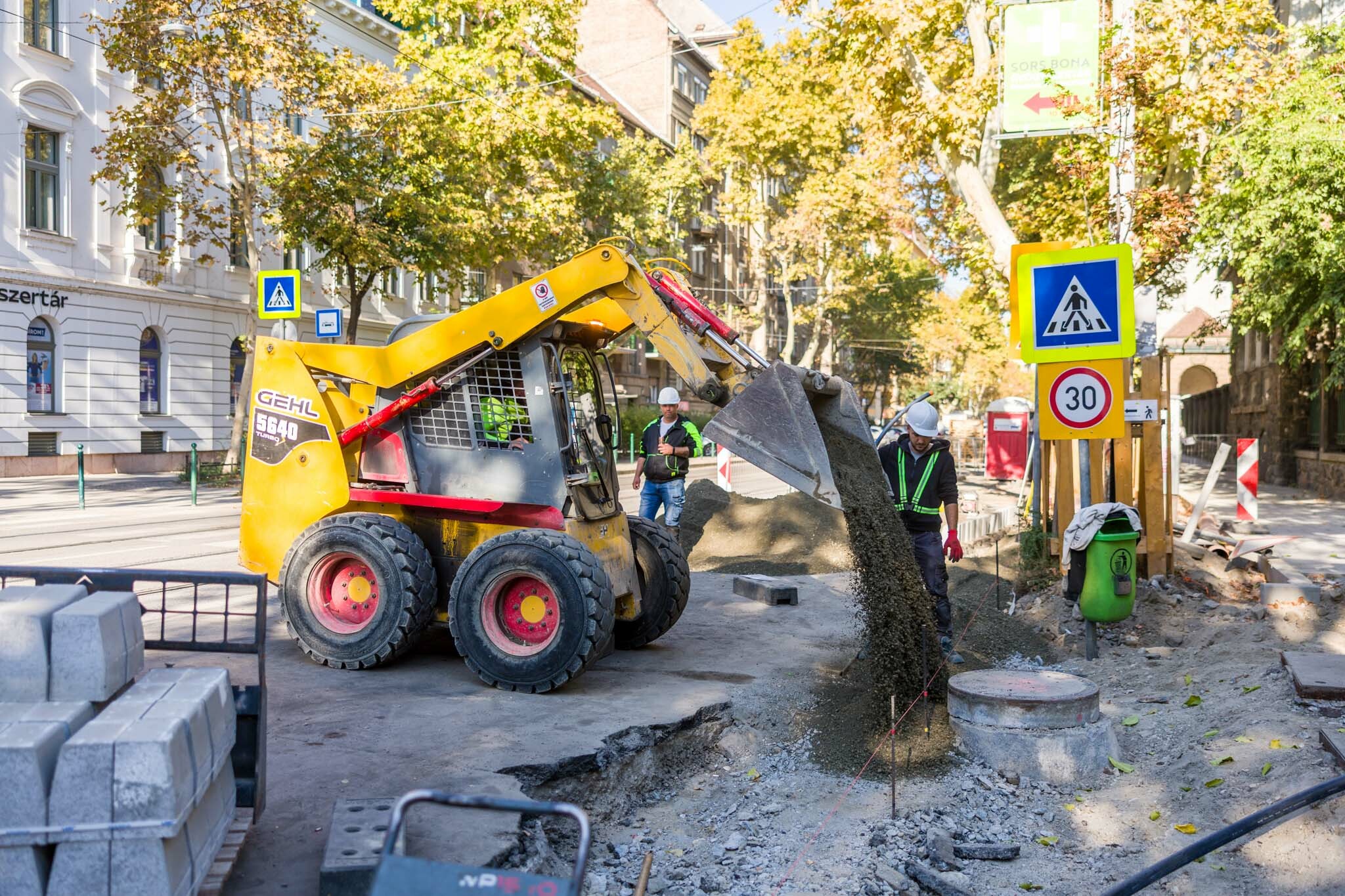
It proved difficult to find a nearby storage area; a suitable site was only found on Illatos út. Due to the limited space, the materials required for the project are being transported to the cordoned-off area in smaller lorries. Some of the material generated during demolition is also transported here and to Dunaharaszti, where, after the necessary operations have been carried out, it is reused in the construction of the lower layers of the road structure.
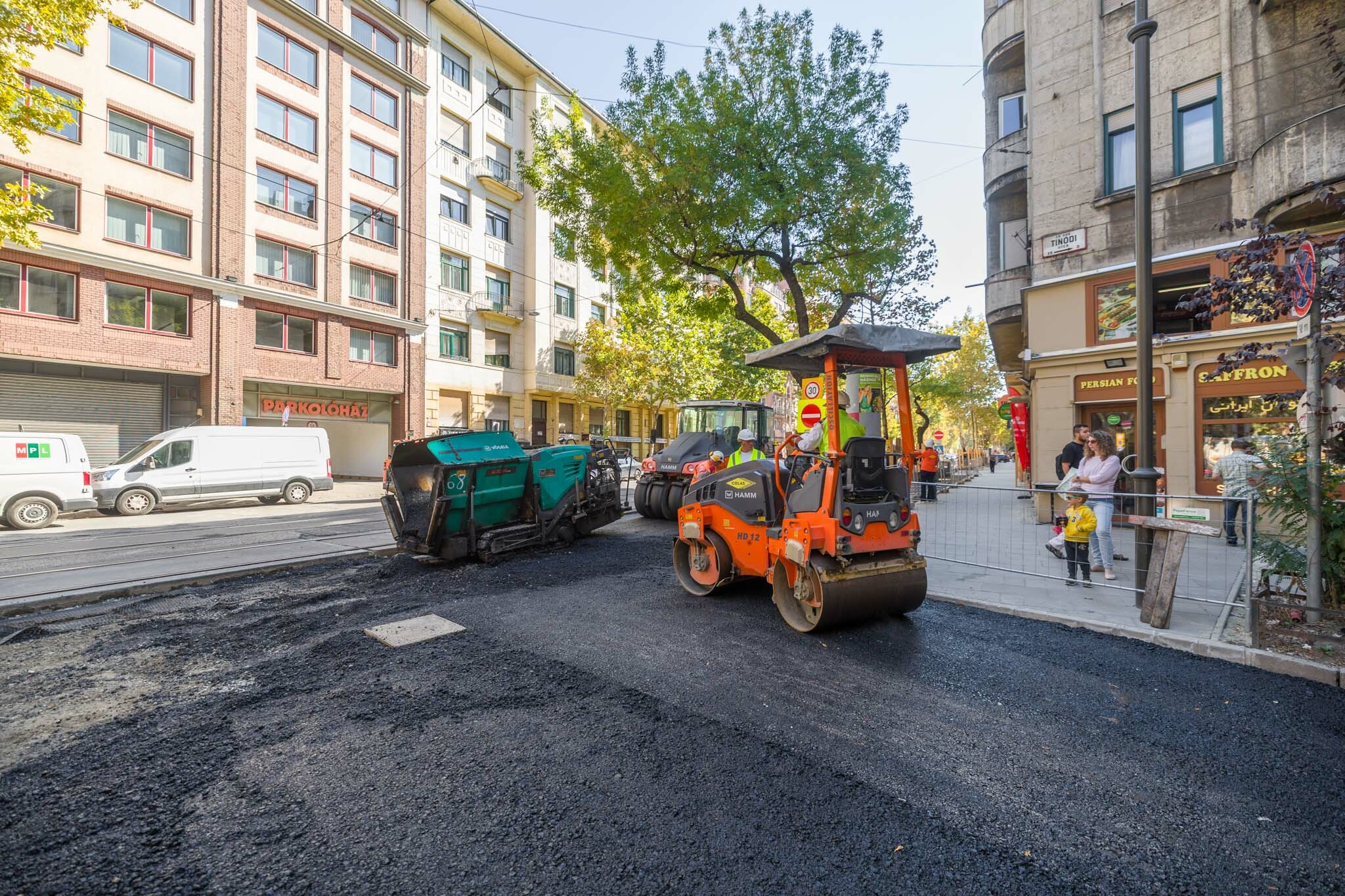
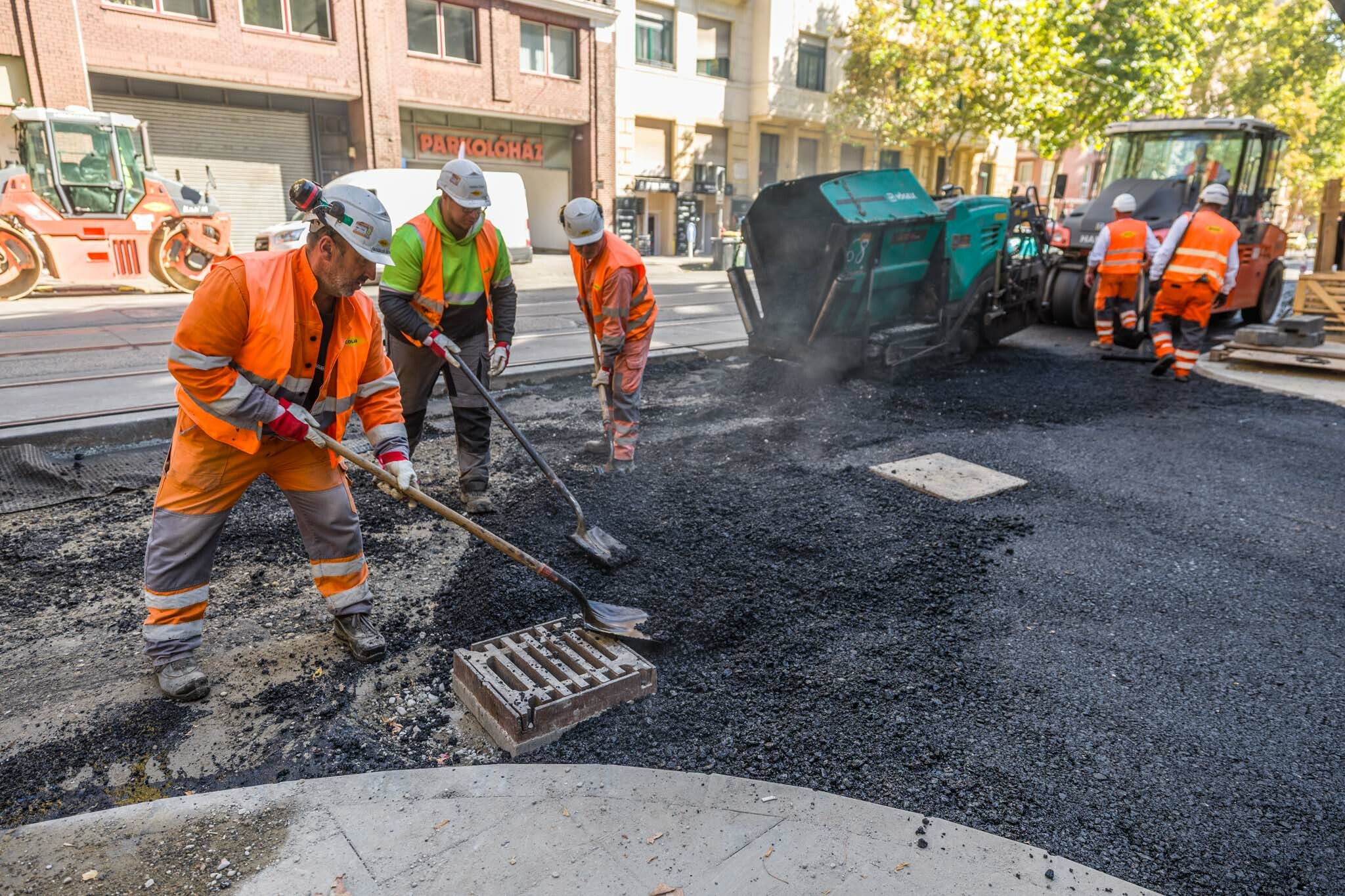
Due to the limited space, a pavement finisher is mostly used for the asphalting work. As there is not enough room for a lorry to manoeuvre alongside it, the asphalt is fed into the machine using an excavator.
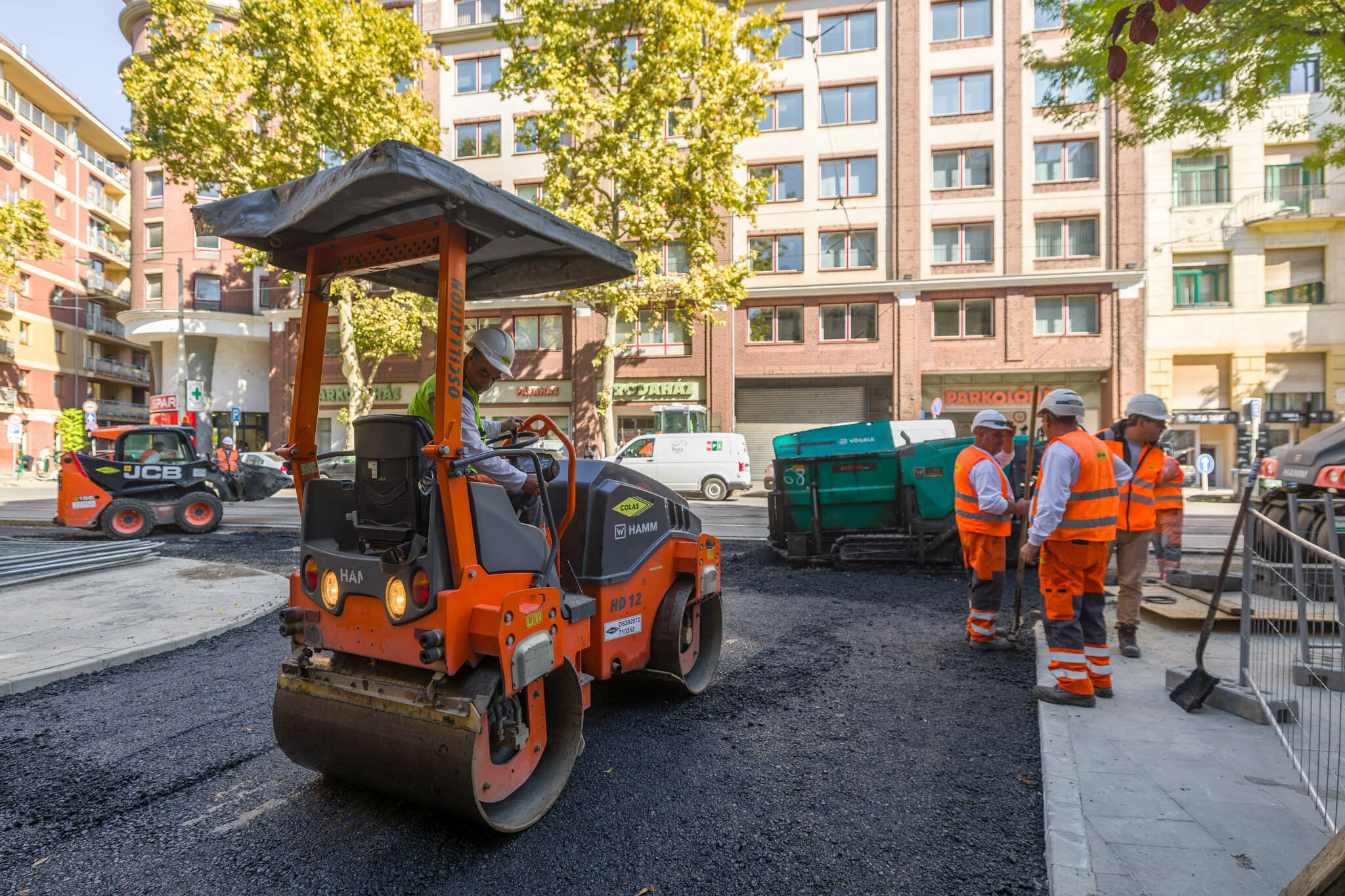
The proximity of residential buildings also influences the daily work schedule. Noisy activities may be carried out on Saturdays between 9 am and 4 pm; on Sundays, such work is not permitted. Dust formation is minimised by wet cutting and watering.
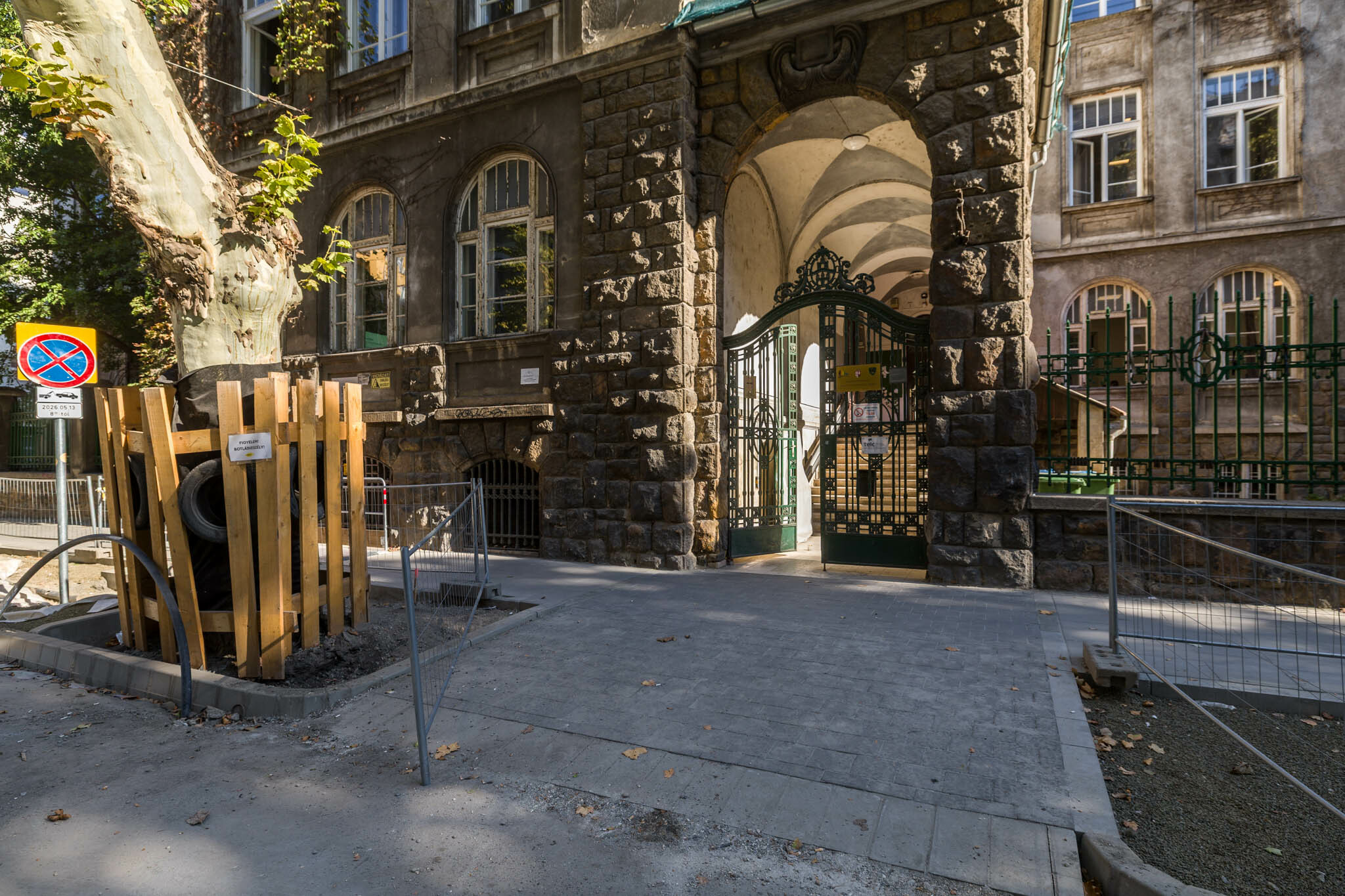
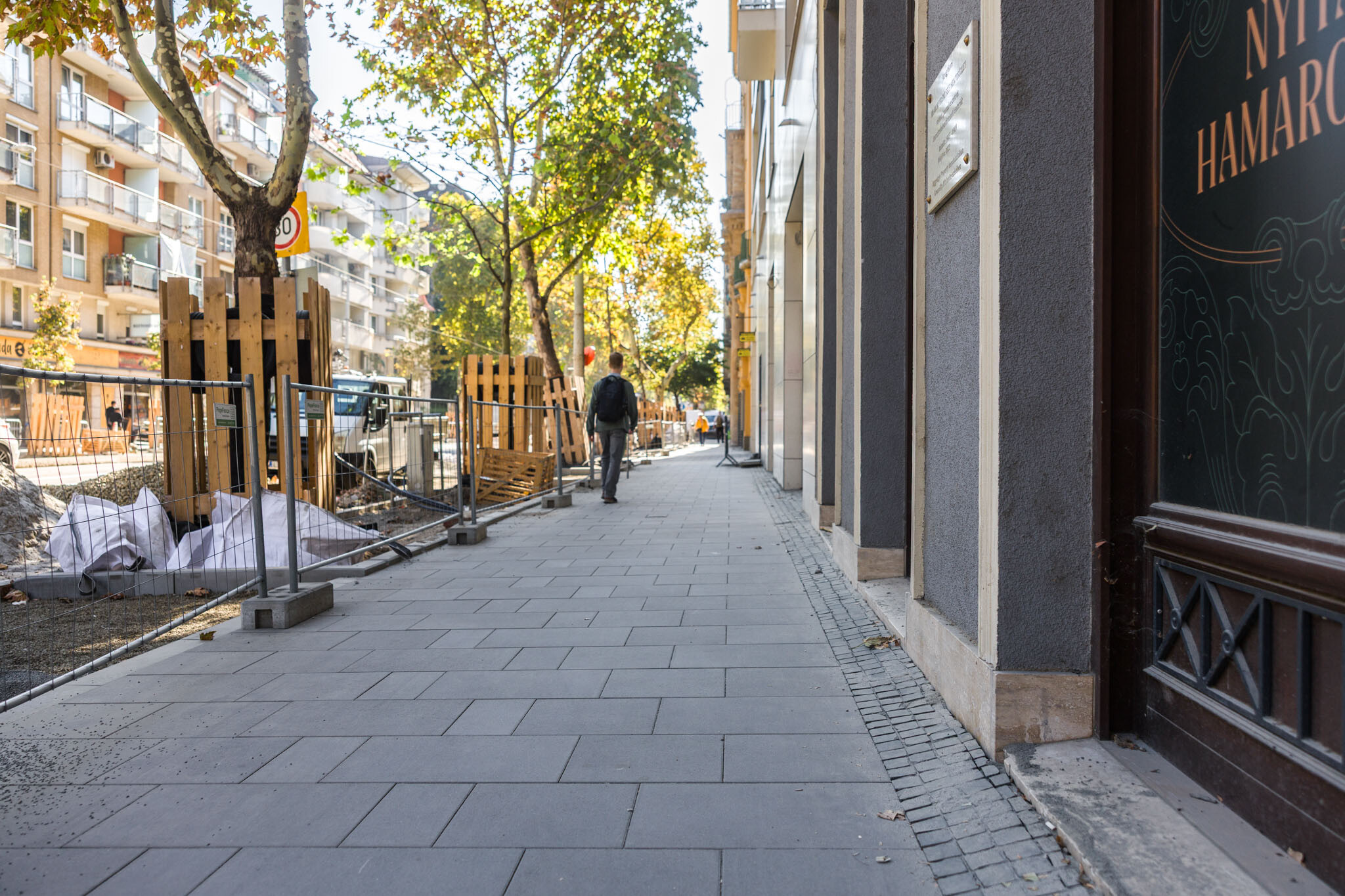
In the area designated for renovation and reconstruction, the pavements are in such a state that they are due for replacement. The specialists from Colas must carry out the complete reconstruction of these whilst ensuring that the entrances to residential buildings and shops remain accessible. This is being achieved using cordons and temporary pedestrian routes. The work area has been divided into four sections on each side, within which the pavements are being constructed first. Whilst work is underway on a particular section of pavement, pedestrian traffic is diverted into the parking lane. Vehicular traffic runs almost entirely along the tram tracks; the final traffic arrangements for the renovated street will also be based on this.
The road surfacing is already underway, whilst the tunnelling work beneath the track is still to be carried out by the contractors
According to information from Colas, the pruning of trees and the milling of part of the road surface have already been completed. In addition, a cement-bound base course and an asphalt binder course have already been laid. Work is progressing steadily on the installation of root barrier sheets, the laying of irrigation pipes, and the construction of pavements and kerbs. The 79 street lights were replaced at the start of the project, within four days.
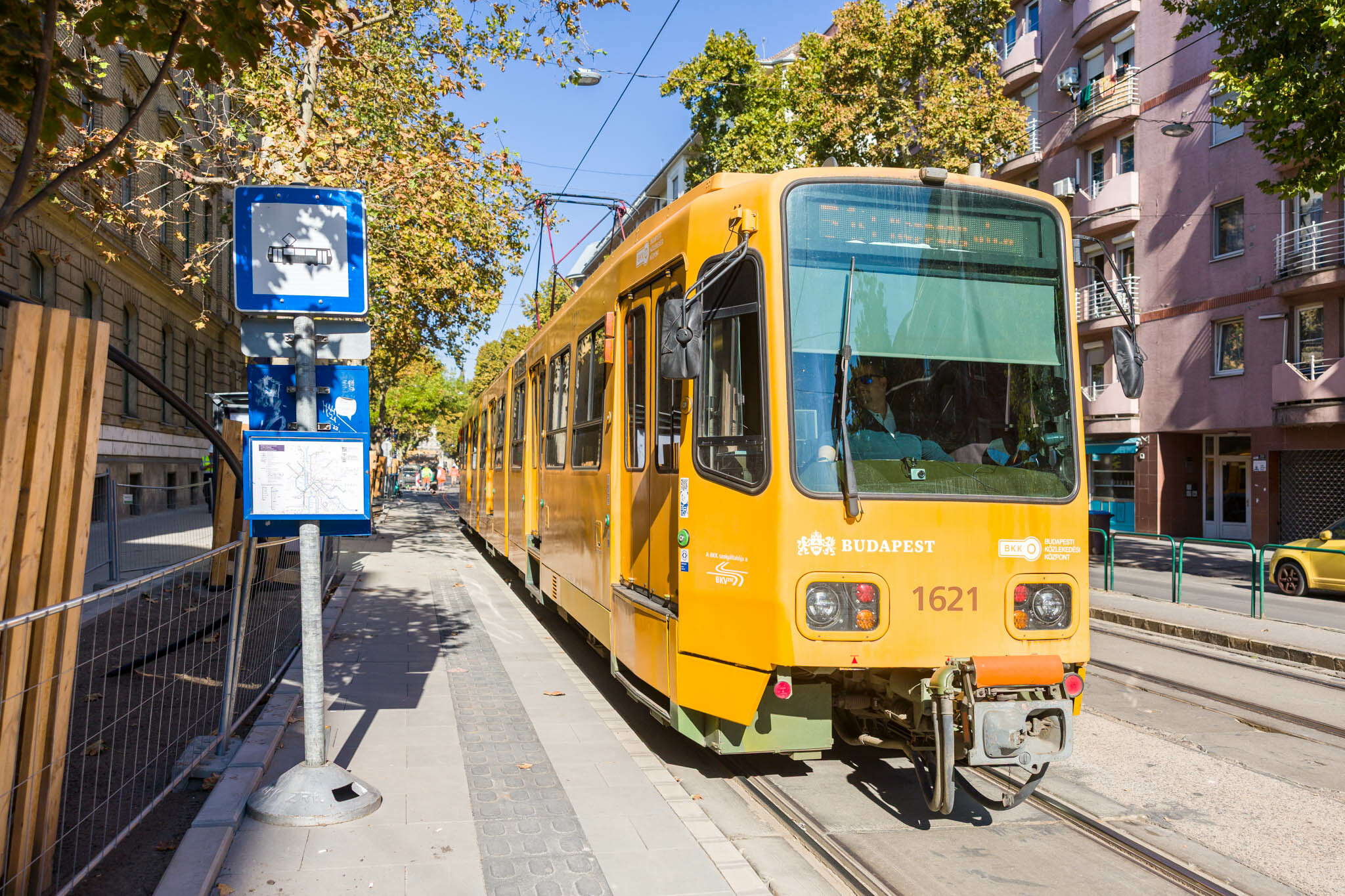
Upcoming tasks include drilling beneath the tram tracks, constructing the row of spherical bollards, and laying the large-format paving stones on the parking lane. Experts have highlighted working alongside continuous tram, car and pedestrian traffic, whilst ensuring that shops, boutiques and restaurants remain accessible at all times, as the most challenging technical aspect of the project.
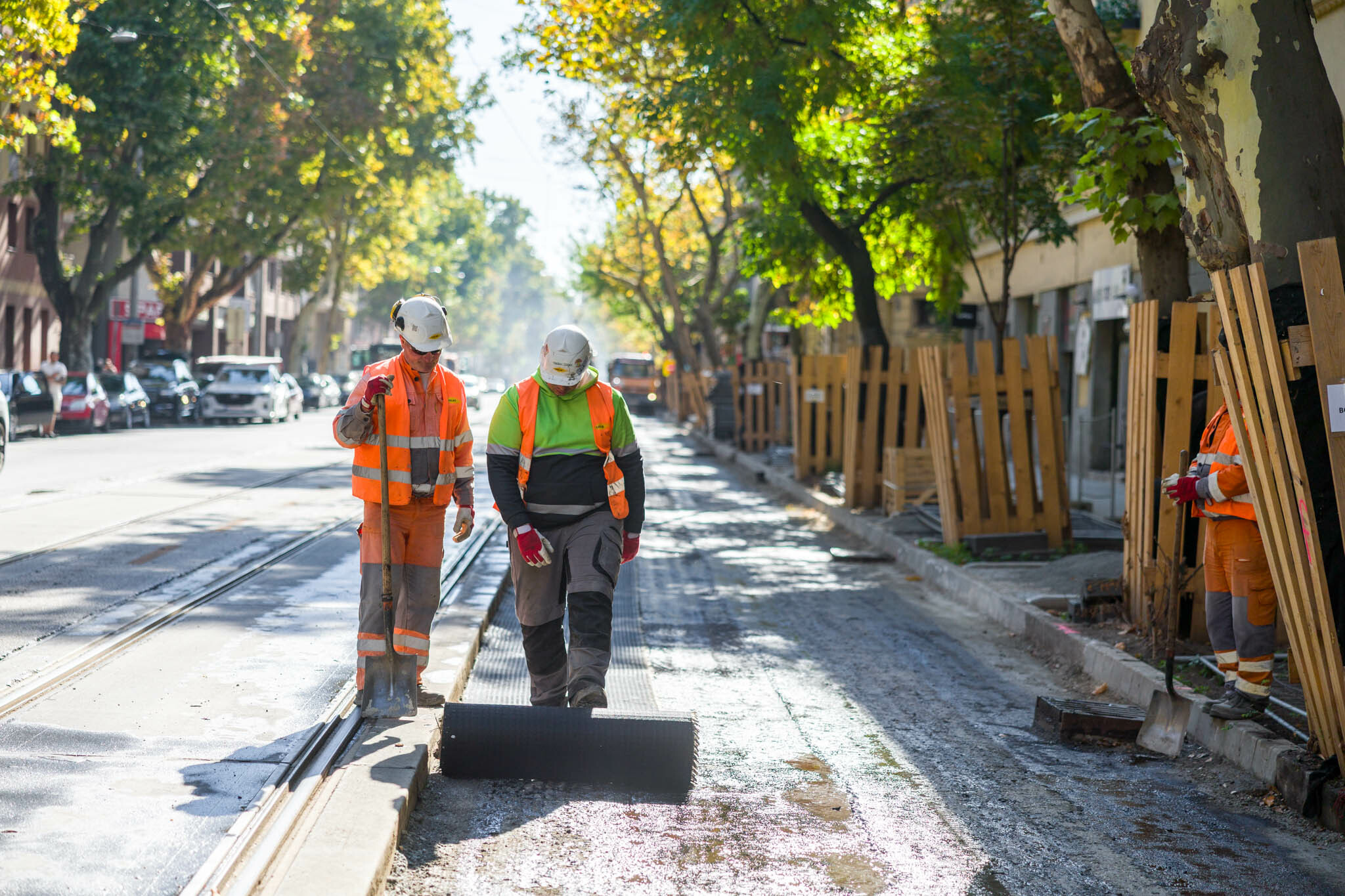
Passenger-friendly tram stops are being built
The construction schedule is being co-ordinated with tram services. Certain work processes – such as the inspection and pruning of trees – required track closures. Similar disruptions are to be expected during the construction of the wearing course alongside the tram tracks. However, the remaining work processes will be carried out whilst tram services continue to operate.
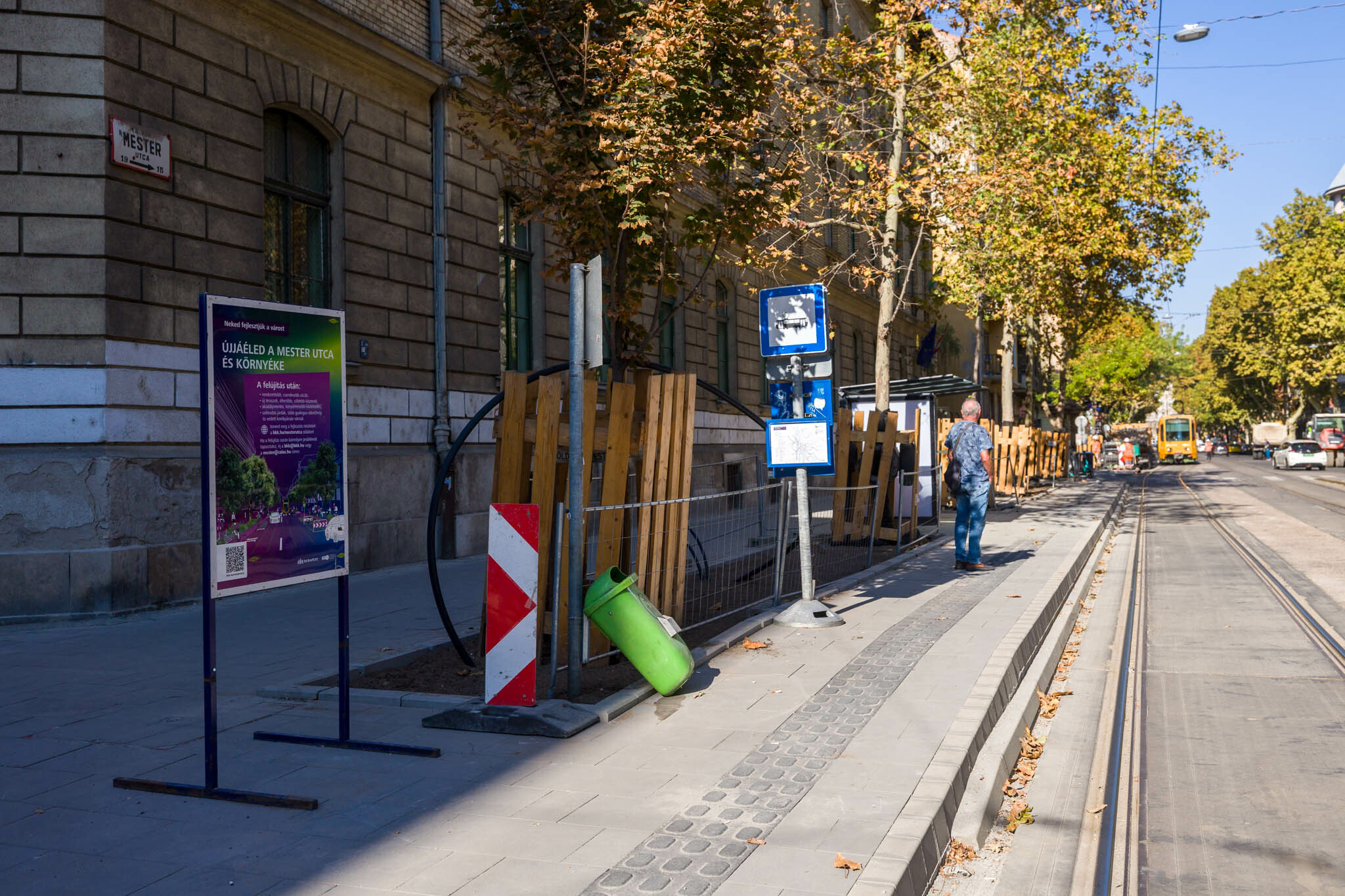
Health and safety specialists from Colas took part in the training organised by BKK; a safety supervisor is on hand to ensure work relating to the clearance of trams is carried out safely. As part of the project, three pairs of tram stops are being rebuilt. Their level is being raised by 26 centimetres to ensure barrier-free access for passengers boarding and alighting from the trams.
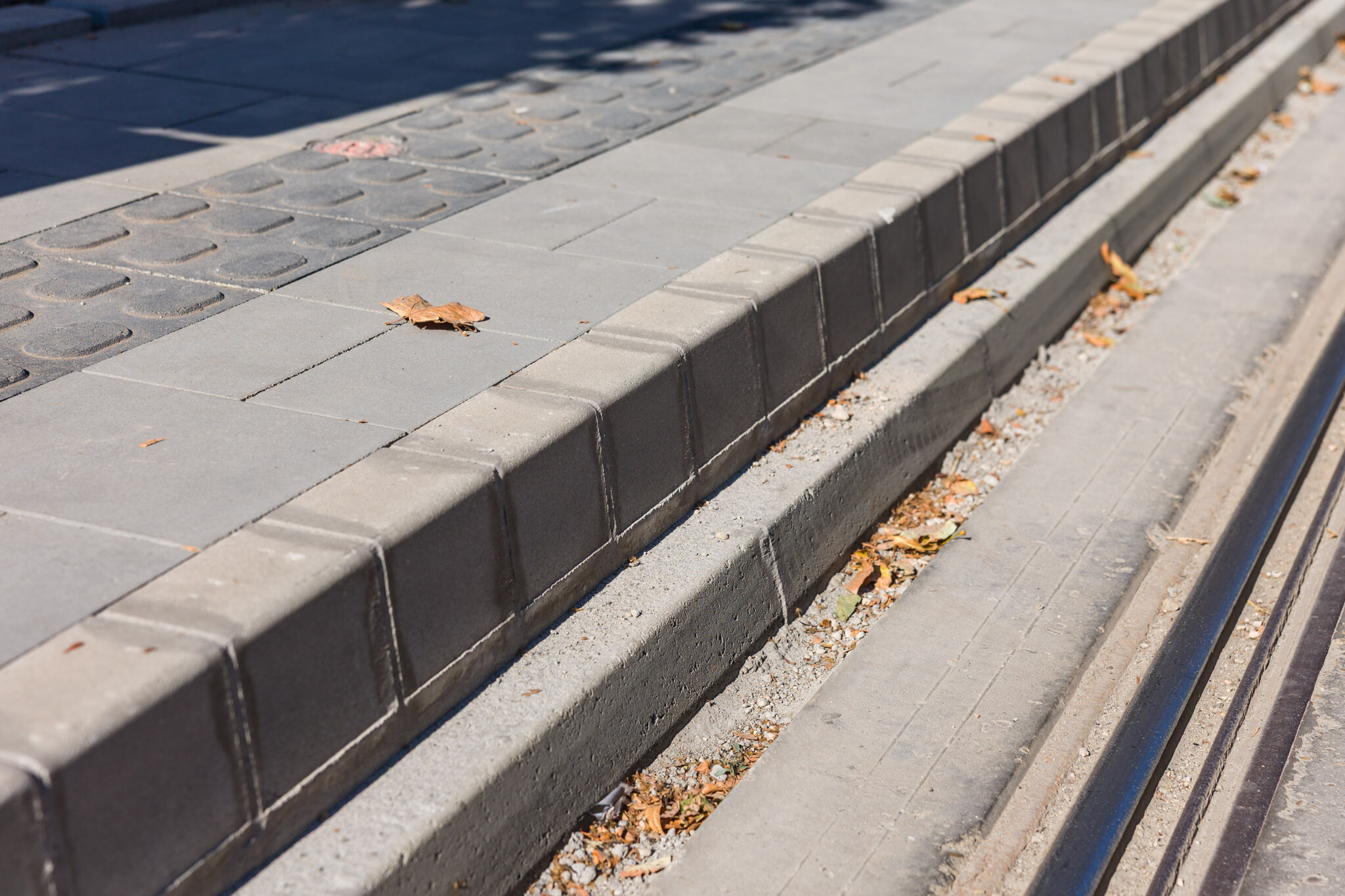
Some are being constructed with a double raised kerb, whilst others are being fitted with a custom kerb. The stops are connected to the surrounding areas via ramps, and new paving, tactile paving, kerbs and handrails are being installed on the platforms. During the works, continuous access to shops, boutiques and restaurants will be ensured, as will the uninterrupted flow of tram, car and pedestrian traffic.
Different purposes, different flooring solutions
The redevelopment will also change the traffic arrangements on the street. Separate, protected cycle lanes will run alongside the pavements in both directions, which will result in a reduction in the number of parking spaces. Five pedestrian crossings will be rebuilt and two new ones will be created, whilst raised kerbs on the connecting streets will help to reduce speed and guide pedestrian traffic.
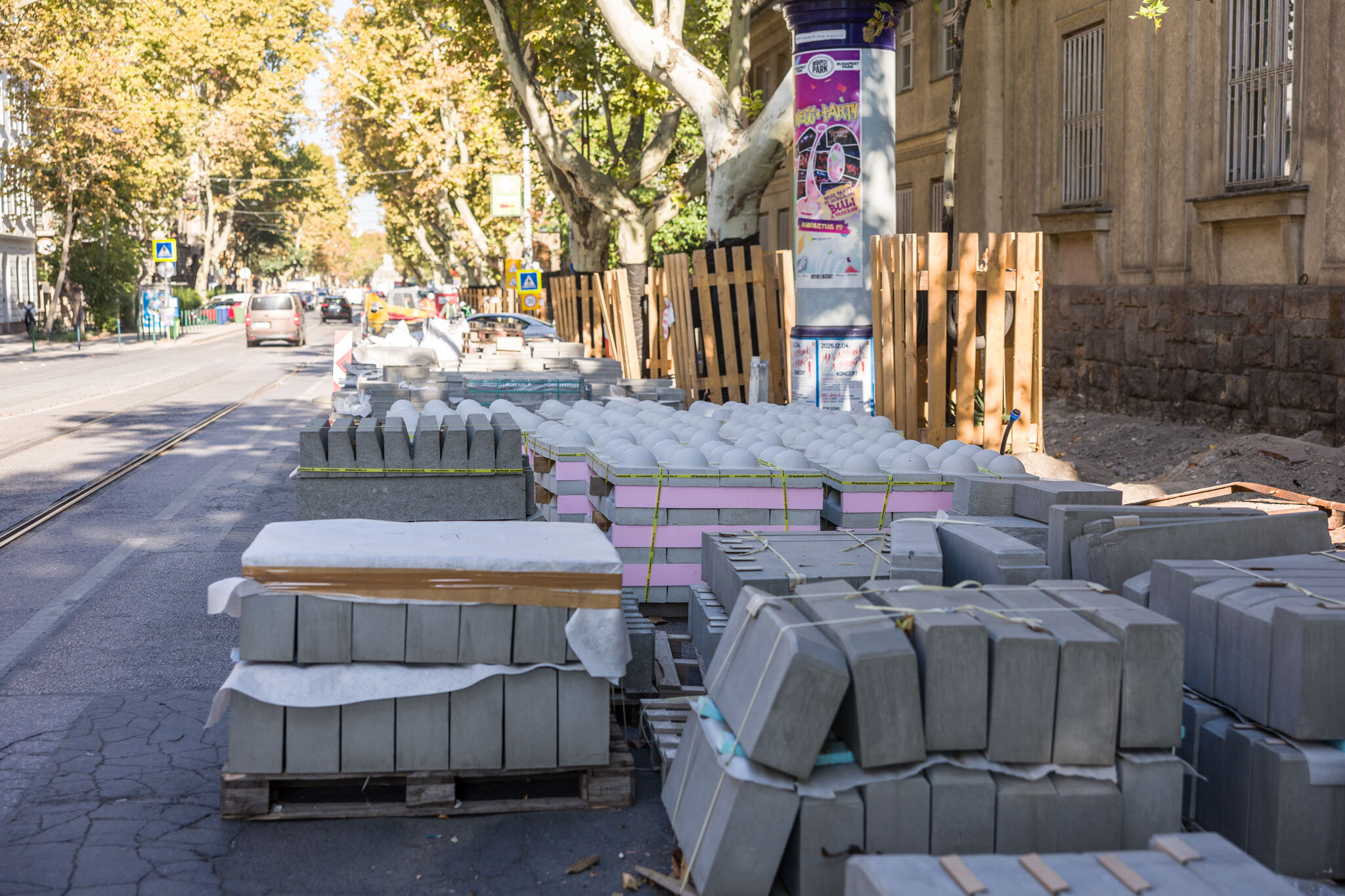
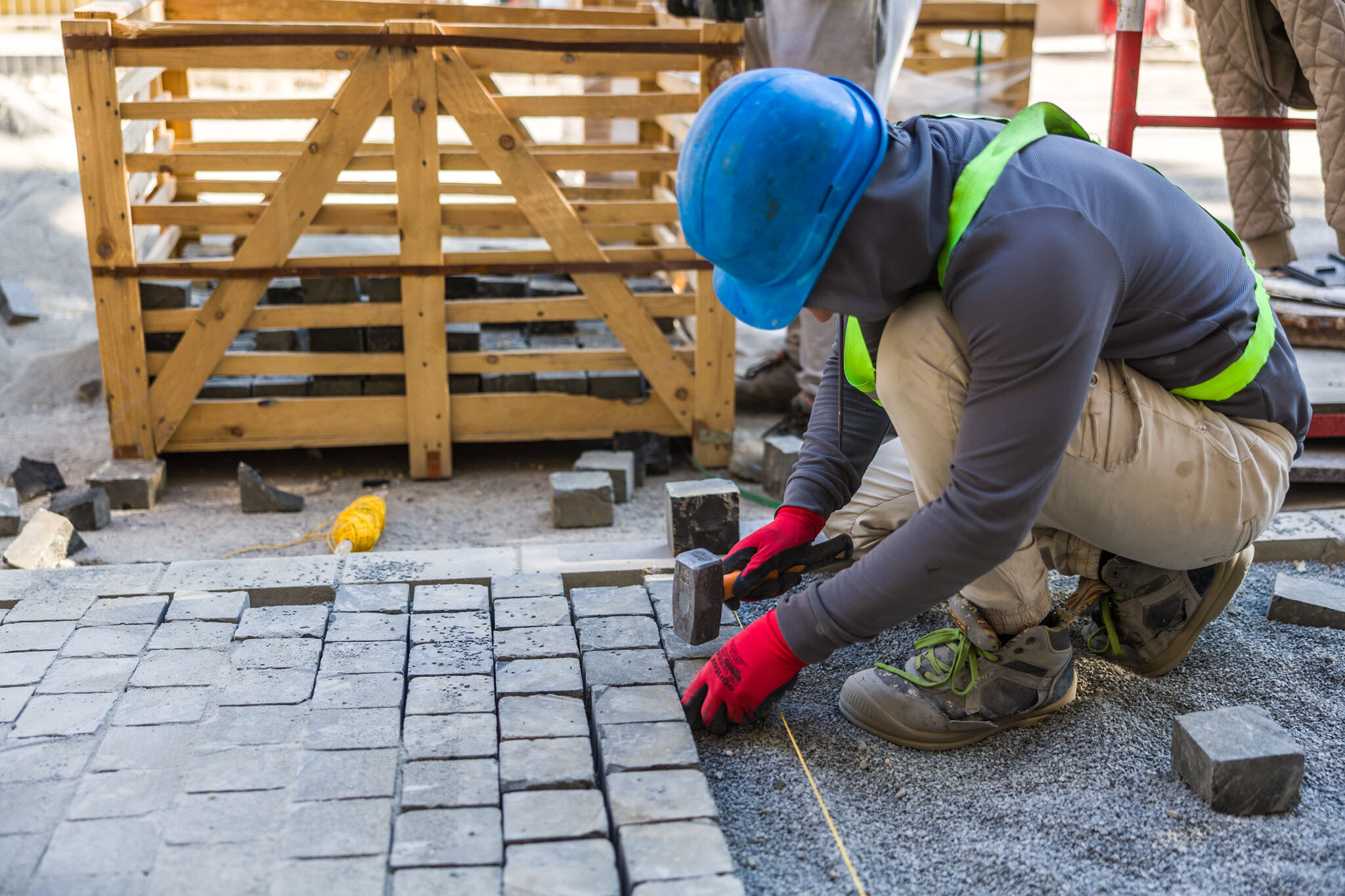
The design of the new paving will be tailored to the intended use of each surface. According to the plans, in addition to the asphalted areas, small and large cobblestones will be laid over an area of approximately 2,700 square metres. In the verge alongside the pavement, 6×6 centimetre blocks will be used; between the planters, 10×10 centimetre blocks; and in the parking bays, 18×18 centimetre blocks. Instead of broken stones, new, cut basalt stones will be laid. The cut surfaces help to create an even surface, whilst the narrow joints reduce the likelihood of the stones becoming dislodged. The stone and tarmac surfaces are separated by kerbs.
Some of the rainwater is channelled into the flowerbeds
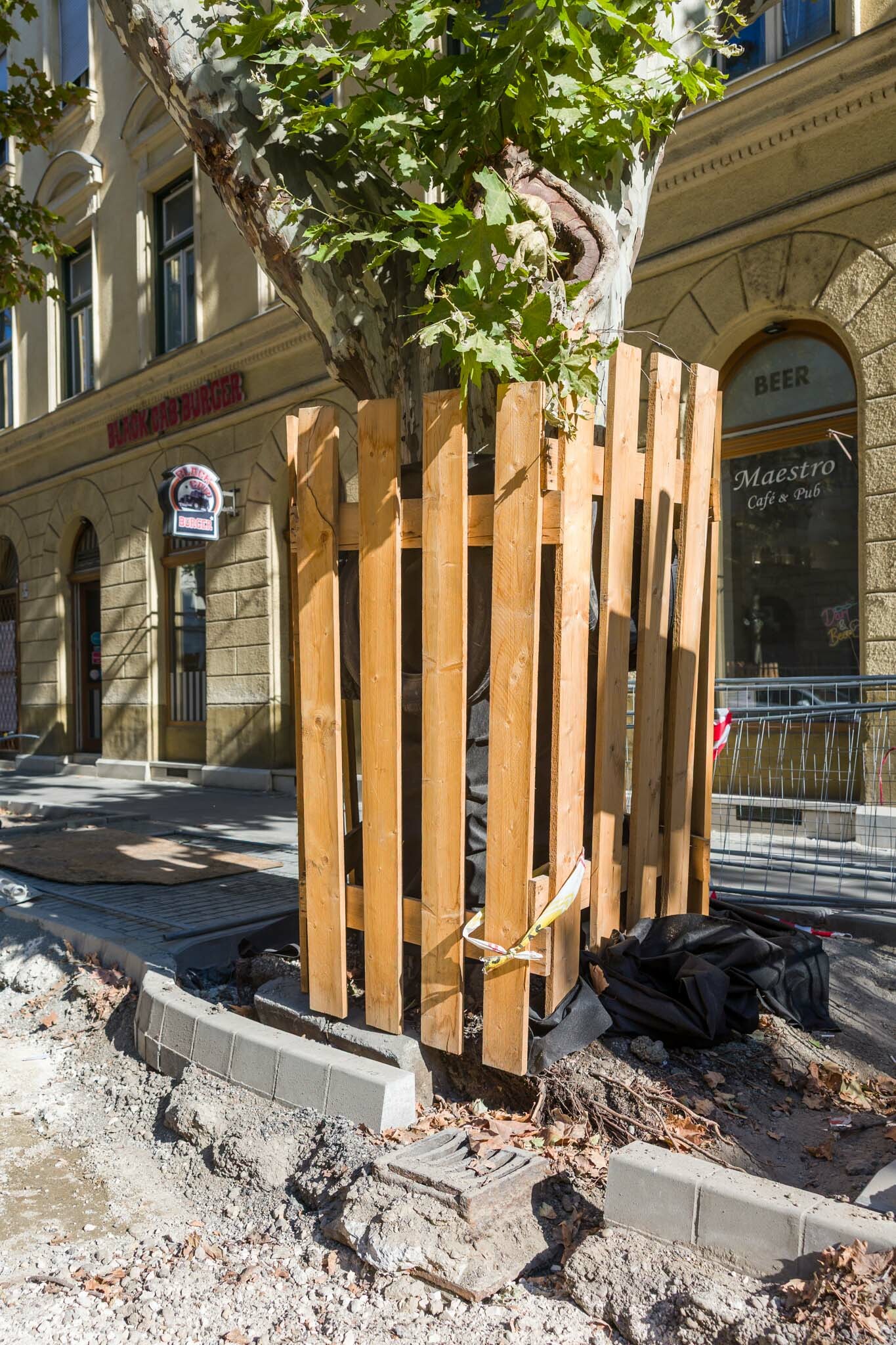
The design of the paving also provides for the drainage of rainwater. In the case of car parks, water is channelled away using watertight jointing and an appropriate side slope; on other stone-paved surfaces, however, the gaps and permeable base layers allow water to seep through. Street drainage continues to be provided by gullies and a closed system. At high and low points, adequate drainage is achieved by designing the paving with longitudinal gradients. Rainwater is channelled from the pavements between the planters into the flowerbeds through openings left in the kerbs.
The kerbs and the laying of cables are being aligned with the trees
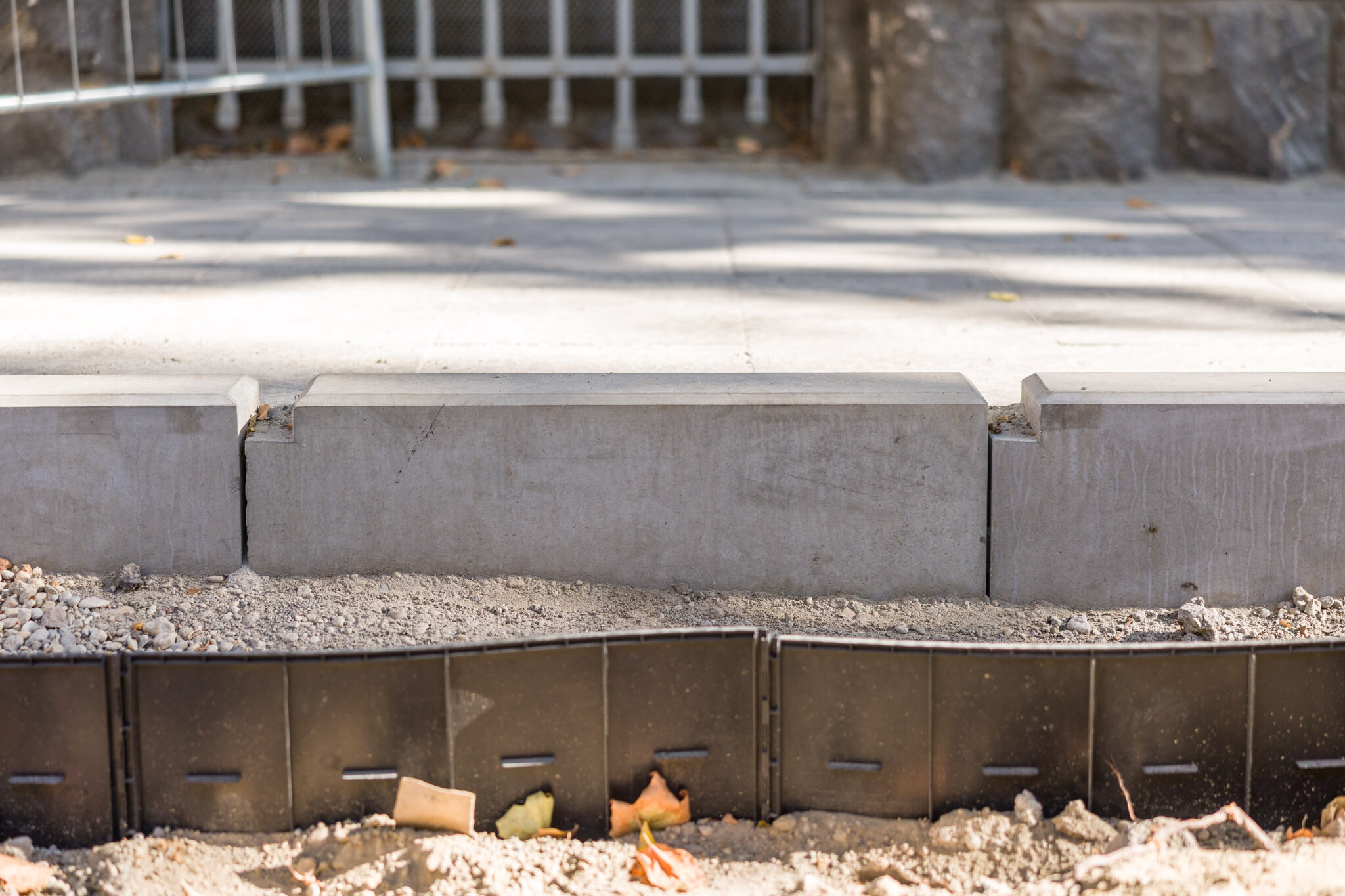
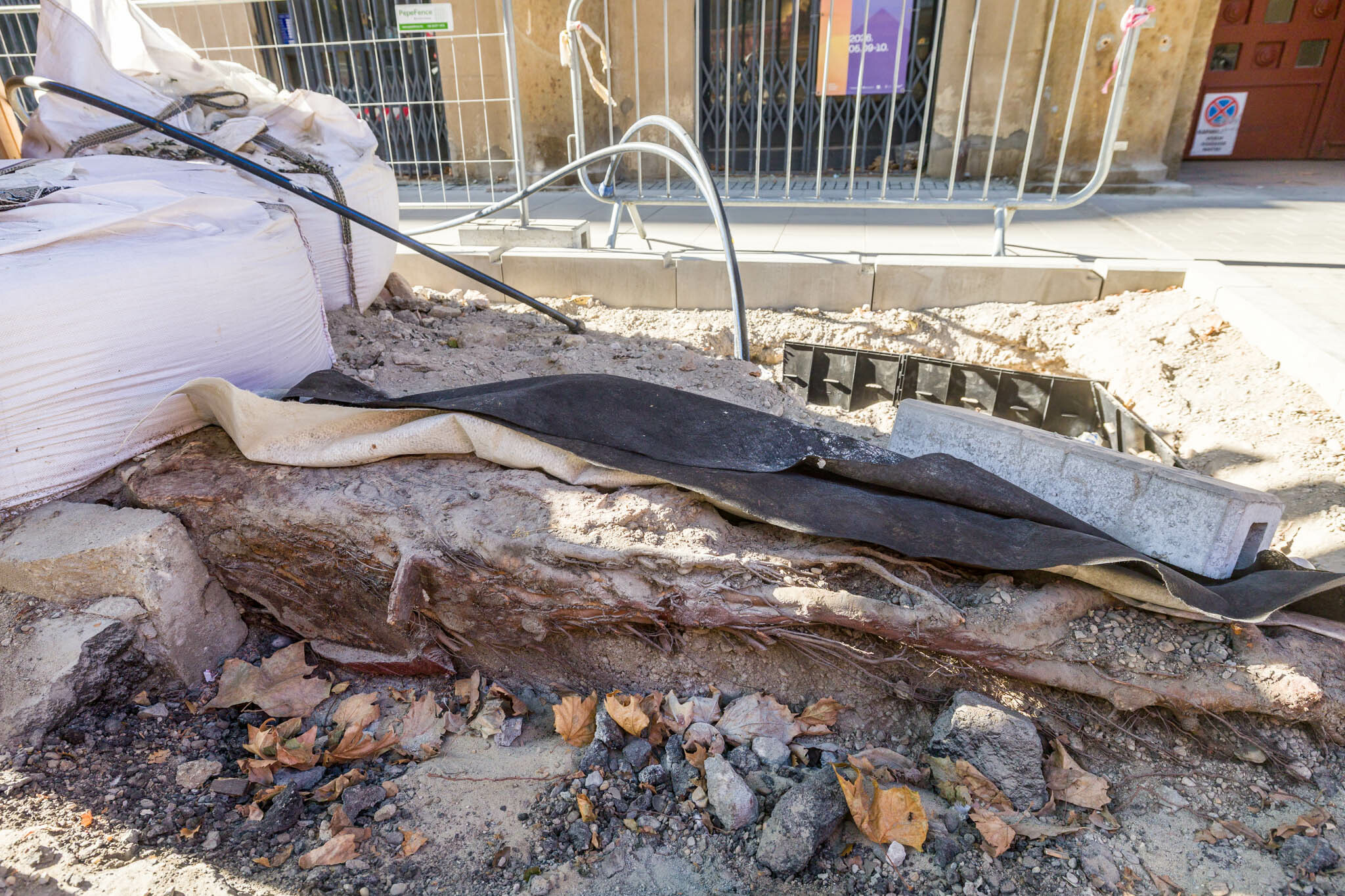
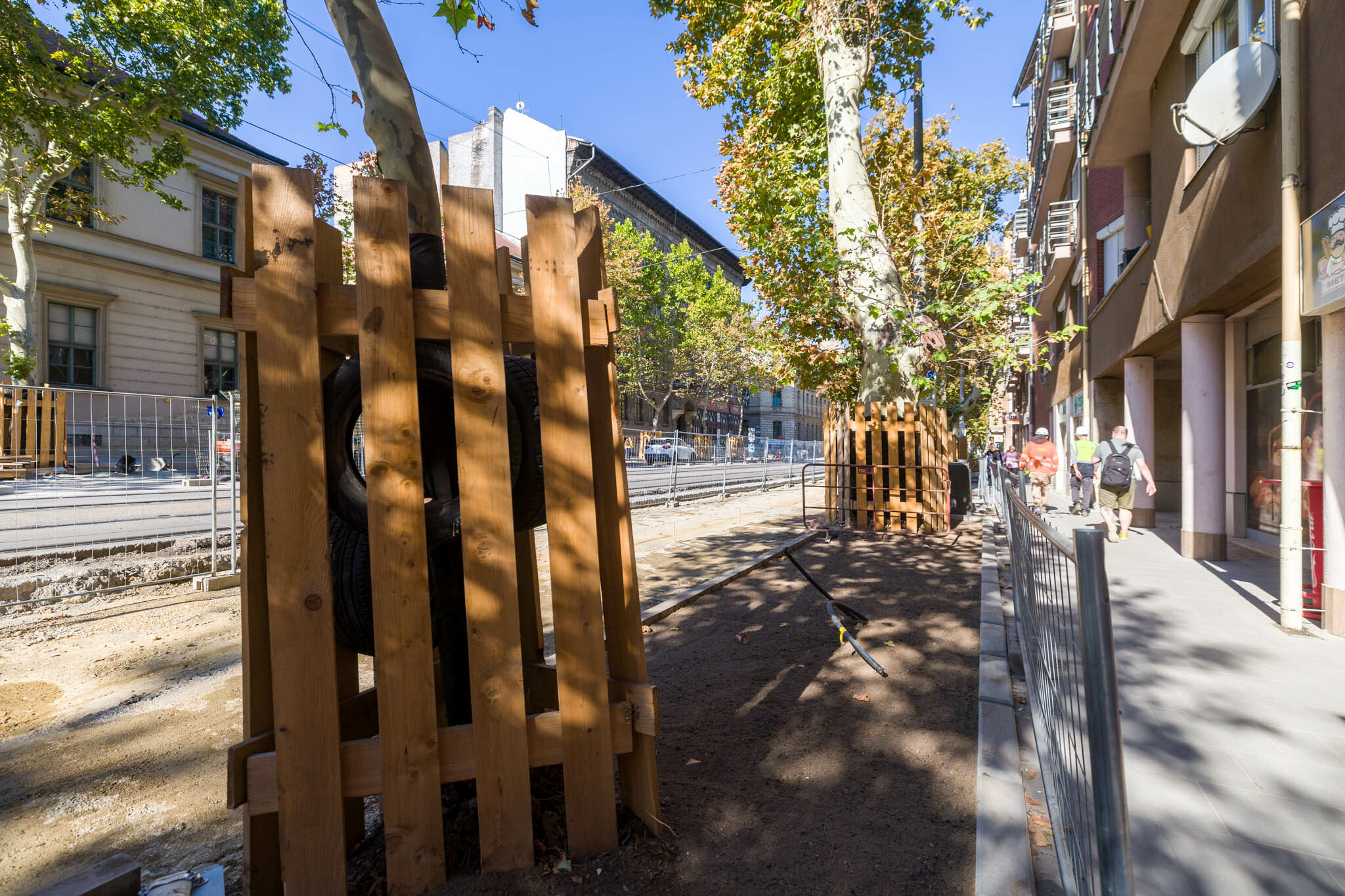
A key priority is the preservation of the existing tree-lined avenue. Experts from Főkert and Budapest Közút are holding ongoing on-site consultations to decide where to retain the old kerbs during the construction of the new pavements, in order to ensure the stability of the trees and to protect their roots. Approximately 2,065 fm of root-protection plates are being installed around the trees. Work within the tree protection zone requires manual labour, and Főkert provides daily technical supervision to ensure the work is carried out professionally. The trenches for the 5,620 metres of pipework in the irrigation system – which comprises twenty control units and three network connection points – are being dug by hand along their entire length. At utility crossings, the pipes are routed via elevated sections and, together with the fittings, are covered over following sectional pressure testing.
From stork’s bill to meténg – more than 8,000 plants are being planted
A fresh layer of humus is added to the renewable plant beds. In addition to the shrubs, 6,504 perennials and 1,805 bulbous plants are being planted in the growing medium: the varied selection includes ornamental grasses, cranesbills, sages, yarrows, as well as tulips, daffodils and ornamental bulbs. The width of the green belt will remain unchanged, whilst the areas covered with vegetation will typically extend along the length of the street.
Work is proceeding in a coordinated manner, under on-site supervision
The coordination of the works is facilitated by weekly subcontractor meetings and ongoing on-site supervision. Colas Magyarország is involved in the project through laboratory tests, measurements and certain design tasks, whilst Colas Közlekedésépítő carries out the majority of the construction work.
ÚTKORONA Kft. is involved in the demolition and construction of pavements and kerbs, whilst Yunex Traffic Kft is involved in the installation and calibration of traffic control and monitoring equipment. The Parkfenntartó-Kertészeti és Szolgáltató Kft. is responsible for the management of green spaces, planting, and the care and maintenance of vegetation. The schedules for each specialist area must be coordinated so that there is always sufficient space in the narrow street for both the next stage of construction and day-to-day traffic.
Source: Link









Mester Street is being redeveloped in a confined space alongside tram traffic

Plans are in place for a new depot and track modernisation to accommodate the CAF trams

We do need a pump after all! – How does the BIM pay for itself in industrial investments?

The government wants 10-year development cycles for the construction sector

Four new bridges to be built in the heart of the former industrial city

Rain gardens are coming to Budafok, with over 3,000 square metres of green space set to be developed

Contemporary art deco in Csopakon

Safer driving on the motorways: new digital signs for the MKIF
-

 Bound track 2026. 09. 18.
Work has begun: the spur line will provide a direct rail link between Szombathely and Zalaegerszeg
-
Industry news 2026. 09. 19.
Duna Aszfalt paid more than 10 billion forints in interest to state-owned banks
-
Current at 2026. 09. 17.
The contractors for the Szolnok spa have brought a lawsuit against the city to secure payment of their final invoice
-
Climate-X 2026. 09. 22.
From the heating plant to the library – solar panels are to be installed on eight local authority buildings in Kiskunfélegyháza