Water management
The government wants 10-year development cycles for the construction sector

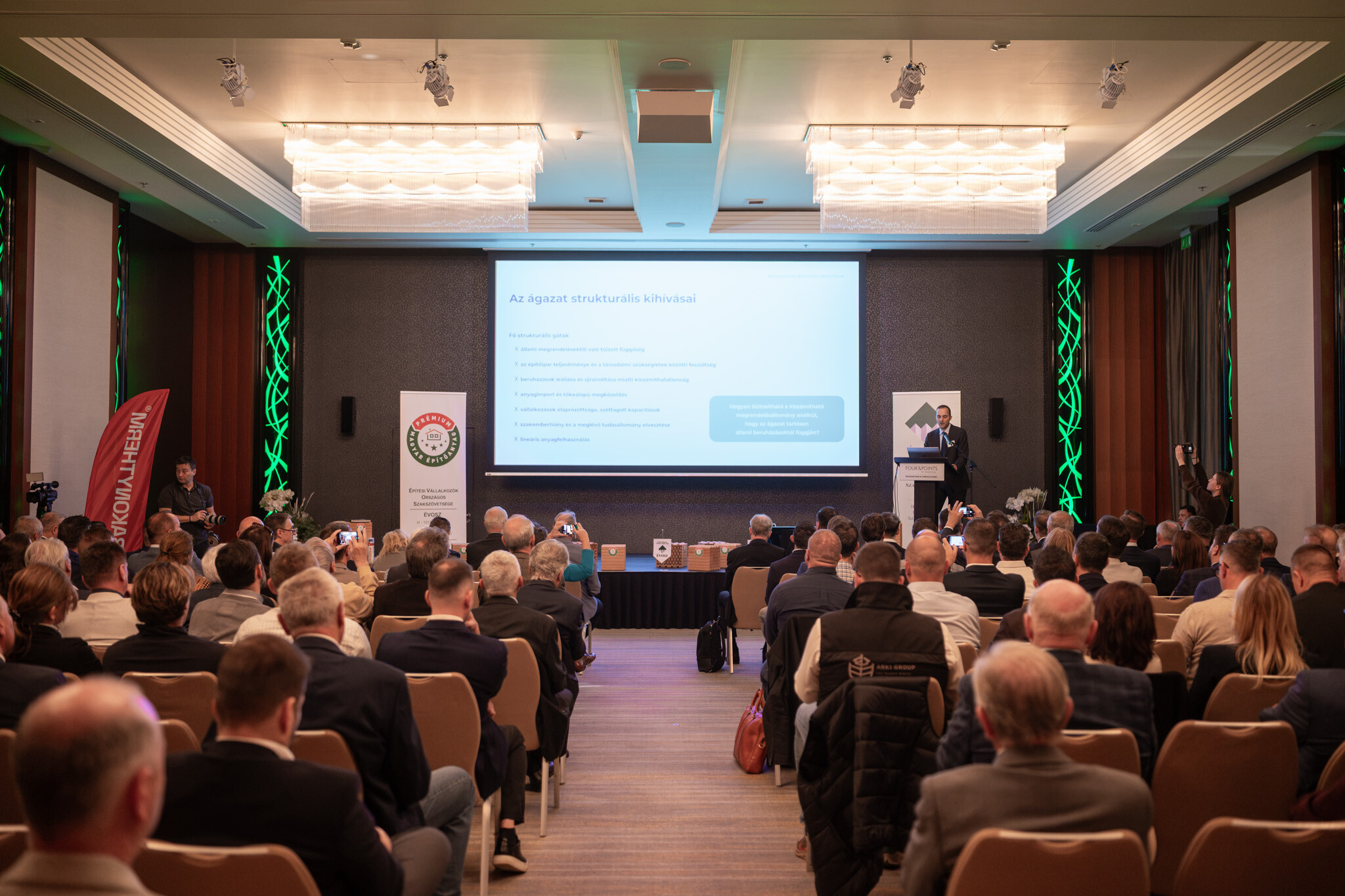
This year, ÉVOSZ organised its annual national construction industry conference in Kecskemét, entitled ‘National Construction Industry Conference: Focus on Sub-sectors – Challenges, Solutions and Breakthroughs in the Construction Industry’. József Gaál, Chairman of Bács-Kiskun Megyei Kereskedelmi és Iparkamara, delivered the opening address, followed by Samu Szemerey, State Secretary for Architectural and Building Construction Projects, who presented the government’s assessment of the construction sector and outlined the results expected in 2027.
A national timetable for public investment is on the way
The main structural barriers he identified are:
- dependence on government contracts,
- the tension between the performance of the construction industry and societal needs,
- unpredictability arising from the suspension and resumption of investment projects,
- input-based and capital-based approaches,
- the fragmentation of businesses
- a shortage of skilled workers and the loss of existing expertise.
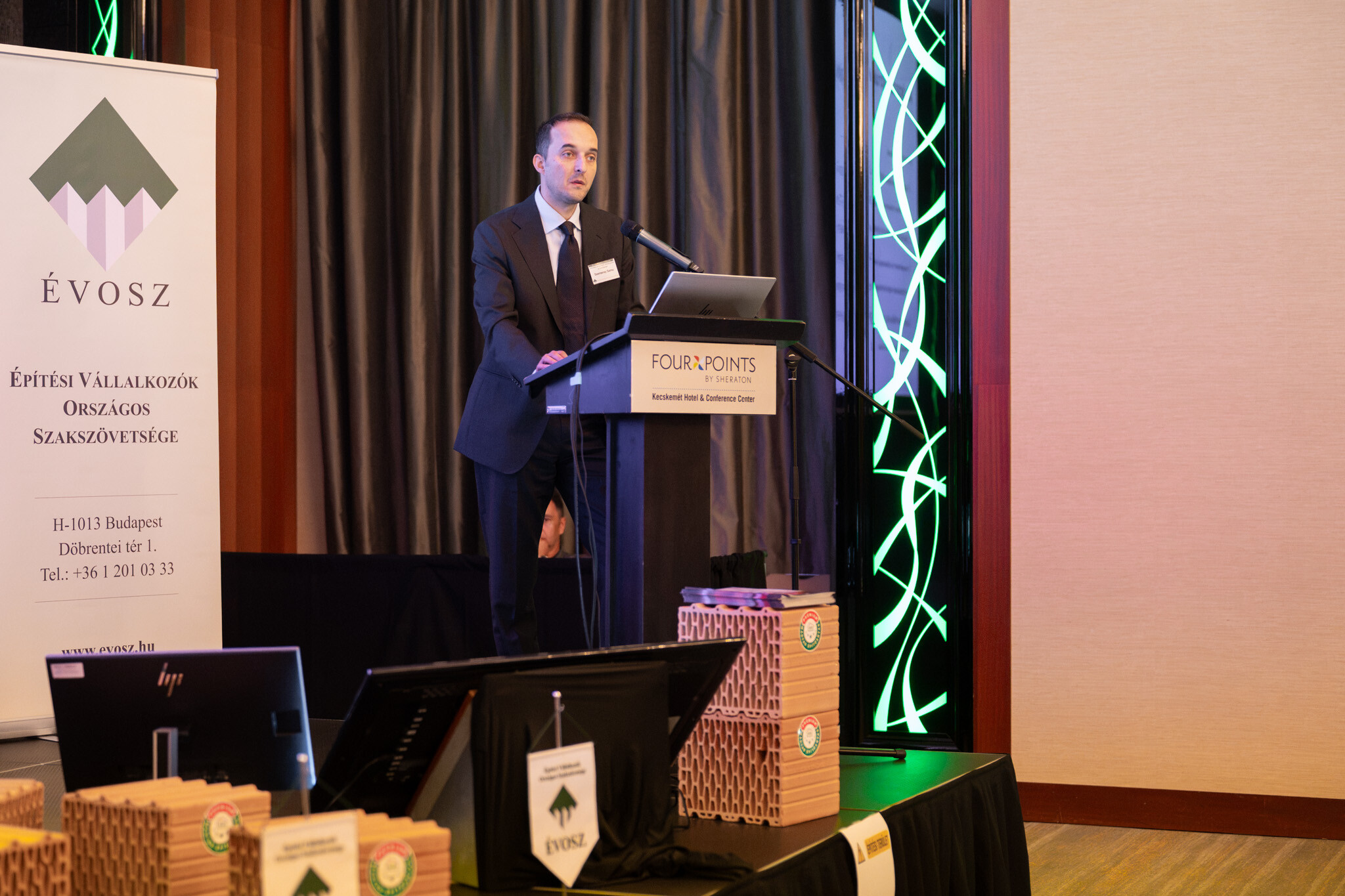
In his view, strengthening market competition should be a strategic objective; he therefore sees the state’s role as being to put the regulatory framework in order and to ensure that the public investment process is swift, transparent and market-friendly.
They wish to think in terms of 10-year development cycles, based on a „transparent, predictable state investment pipeline”, so that the hectic fluctuations can be transformed into a more balanced, predictable process. A national timetable is therefore being drawn up. All this requires a construction economy system that results in predictable orders, more efficient investment, more affordable housing and a better-quality built environment. To achieve this, it is necessary to ensure that
„Government projects should truly set an example in the areas of sustainability or public benefit.”
Hungarian contractors must not be excluded from major investment projects
Following this, László Koji, chairman of ÉVOSZ, turned his attention to the sector’s key challenges. His presentation revealed that the sector’s performance had fallen back to the levels seen during the COVID period this year; this is also supported by the results of the economic survey conducted by the organisation: 70% of companies expect their profitability relative to turnover to be worse by 2026 than previously; whilst 50% of respondents indicated that their workforce is expected to decrease over the next six months.
It is a significant indicator that 80% of companies cited a lack of orders as the primary obstacle to their business activities.
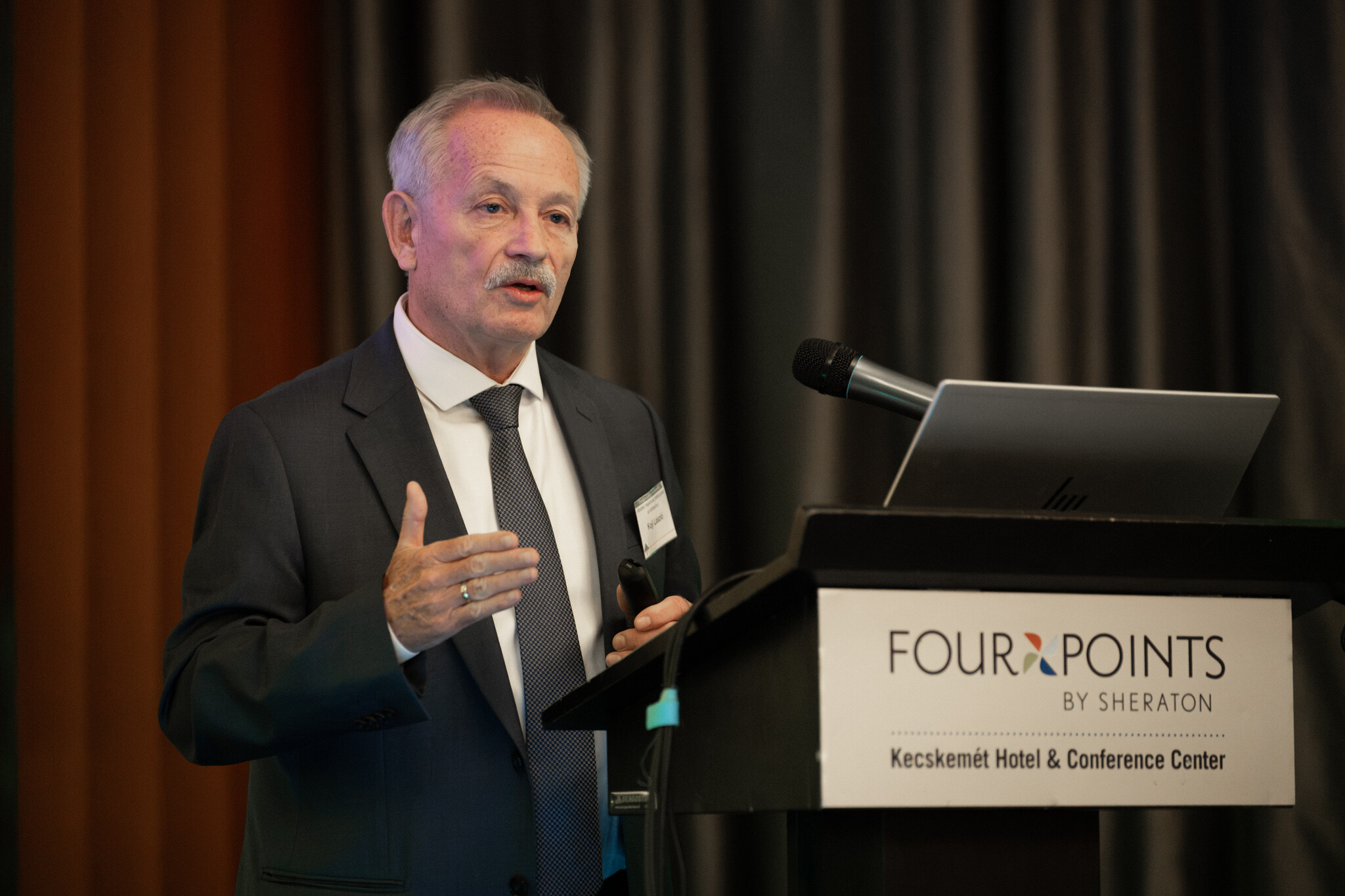
Clarifying government contracts at project level is very important for the sector. „It is important that the government creates the right conditions for those who would make investments involving construction projects, (…) and at the same time, we would not want domestic resources to be excluded from investments by major foreign investors – particularly those from outside Europe. Such companies should even be obliged to use Hungarian (or EU) capacity to a specified extent in return for the benefits provided by the state.”
There is drama in architecture
Tibor Keszthelyi, Chief Executive Officer of FŐMTERV Zrt. and Vice-Chairman of ÉVOSZ, sought to outline a vision for the future by summarising the data from the past four years for 85 design firms.
„There is drama in architecture,” he said, a point well illustrated by the steady decline in design work over the past four years; indeed, the number of contracts has fallen in both civil engineering and building construction. In Hungary, architectural design has seen the sharpest decline; indeed, even by international standards, Hungary has experienced the greatest downturn.
„2027 will be rock bottom; we’ll have to see it through with a positive outlook – from there, the road leads upwards,” emphasised Tibor Keszthelyi.
Orders have been falling since 2022. Architects’ turnover stands at -27%, whilst that of civil engineering firms is -13%; and one-sixth of the workforce has been lost.
As he said, civil engineering works under contract Baross Gábor terv, and the plans for the construction of social housing and student halls of residence, as well as contract Wekerle Program, could pull the sector back from the brink; however, as the tenders will not be launched until the first half of 2027, very few new contracts are expected in the meantime.
Let’s see what we could change during downtime
Sándor Scheer, Chief Executive Officer of Market Építő Zrt., spoke in his presentation about how the sector must adapt to change.
„The first generation of the construction industry following the change of regime has retired – a generational shift is taking place, but it is not going smoothly. This presents us with many challenges,” he noted.
The most important thing is that the construction industry’s operations should not be dictated by economic cycles. Predictability is the foundation for maintaining a stable workforce and making capital investments, and thus, ultimately, for development. Whilst economic fluctuations are a huge problem, the lack of a steady order book is the greatest obstacle to development – and indeed to simply staying afloat.
„The Hungarian construction industry is the most volatile and least stable-performing in the EU; yet it is on a par with the rest of Europe. We see this when we work with, or alongside, people from other countries.”
„I believe there are a few areas where changes could be made during the current downtime. We have completed a thorough analysis with the ÉVOSZ efficiency working group on how to make our construction industry more efficient:
- Let’s get on with the roll-out of the BIM system; let’s not put it off;
- let’s look at which software solutions can make our work easier;
- let us explore the potential for using AI in our processes;
- the introduction of a standardised budgetary tendering system, which could also lead to standardised pricing.
- let us focus on further improving transparency in the industry;
- The industry should introduce the LEAN method.
- We should focus on prefabrication and modular systems to prevent the problems caused by labour shortages from becoming even more acute.
- Let’s look for new methods, keep up with global trends and move with the times.
We had to halve our workforce to survive
Szabolcs Vingelmann, managing director of SWIETELSKY Vasúttechnika Kft. and vice-chairman of the ÉVOSZ Civil Engineering Division, spoke about how orders in railway construction have been falling for many years; indeed, „in August this year, our order book was 16.7% smaller than in 2025.”
Even compared to other sectors, there is significant fluctuation in railway construction. In 2021, the workforce numbered more than 440, but by early 2025 this had fallen to 200. „We have retained those in key positions: engineers and machine operators; in other words, those with whom we can bid for individual projects. Over the past 6–7 years, our staff have worked in eight countries each year, from Sweden to Croatia. Around 20–30 people from our domestic workforce are constantly working on projects abroad.”
„We are about to begin the renovation of the Komárom–Almásfüzitő railway line; the contract came into force 13.5 months after it was submitted. We asked the government what happens in such cases regarding price risk. The reply we received was: that is the contractor’s risk. It is not easy to plan ahead under these circumstances.”
Nevertheless, he concluded his speech on an optimistic note: „Perhaps the future lies with the Baross Gábor terv for all civil and railway engineers; we are very much looking forward to the projects.”
The building materials market is set to undergo a shake-up
Sándor Bujdosó, Chairman and Chief Executive Officer of VIV Zrt. and Vice-Chairman of ÉVOSZ, provided an overview of the challenges facing the specialist construction sector during the remainder of the conference; Dávid Tibor, Chairman and Chief Executive Officer of MASTERPLAST Nyrt., Vice-Chairman of ÉVOSZ, and Chairman of the Domestic Building Materials Manufacturers’ Section of ÉVOSZ, emphasised the importance of the renovation programme and painted a decidedly optimistic picture of the future prospects for domestic building materials manufacturers.
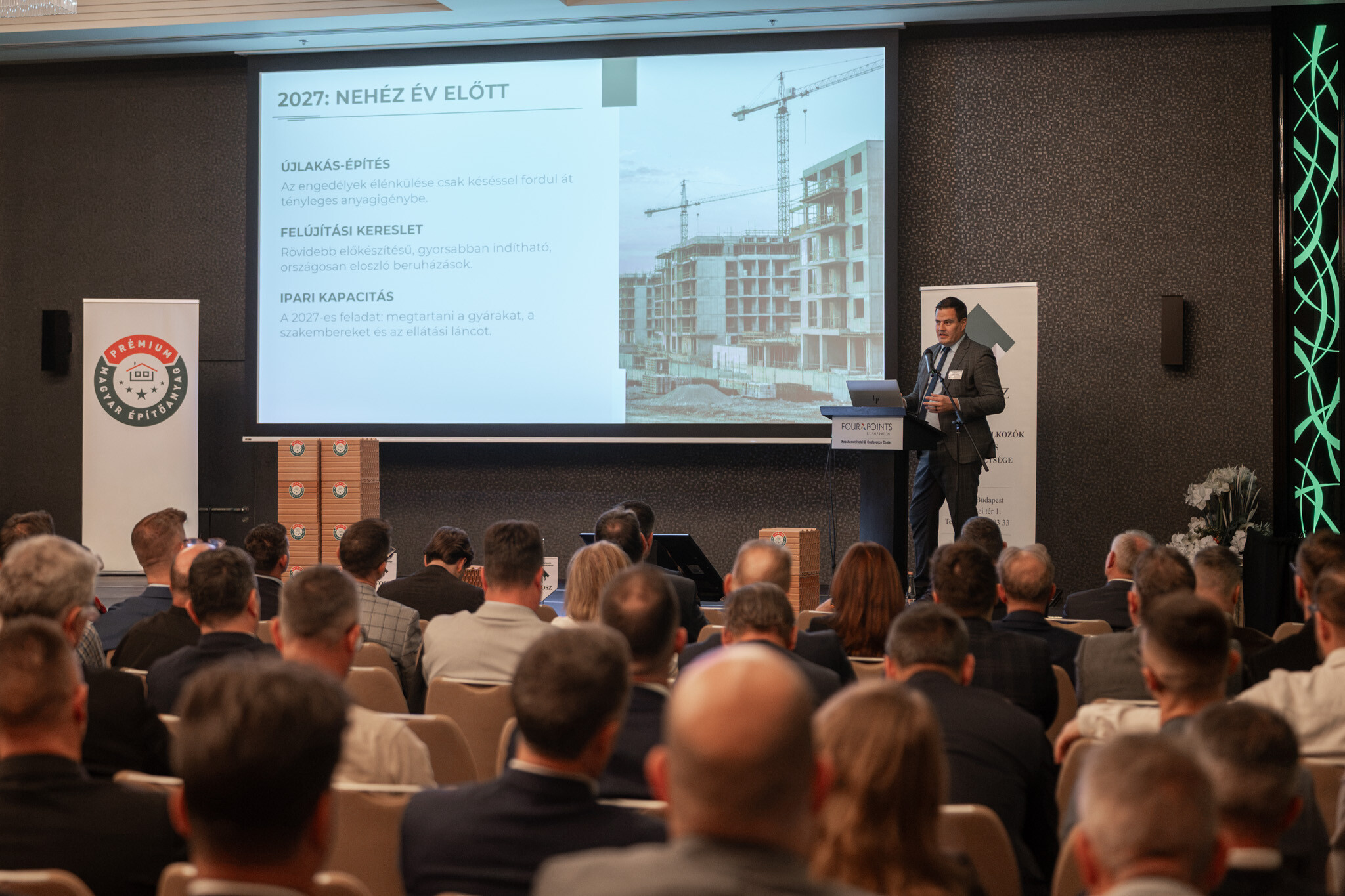
„The 633 billion forint in funding for the Wekerle Plusz programme could amount to a very large figure due to the multiplier effect. We estimate that more than 2,000 blocks of flats could be renovated, which could mean as many as 60,000 flats.”.
From this point on, the most important thing is that the support is made available as soon as possible, because any delay could cause significant damage.”
Finally, Attila Juhász, managing director of Piramis Építőház Kft. and chair of the ÉVOSZ Magyar Építő Materials Trade Section, emphasised the importance of energy procurement, as gas and other energy sources are essential for the manufacture of building materials.
„We expect the building materials market to stabilise around February–March.”
Attila Juhász warned of the devastating effects of the wealth tax: „Many of those medium-sized companies, which otherwise employ a large number of staff, will face liquidity problems as a result of the wealth tax. The tax burden will be diverted away from investment; moreover, demand for premium products manufactured in Hungary will also decline.”
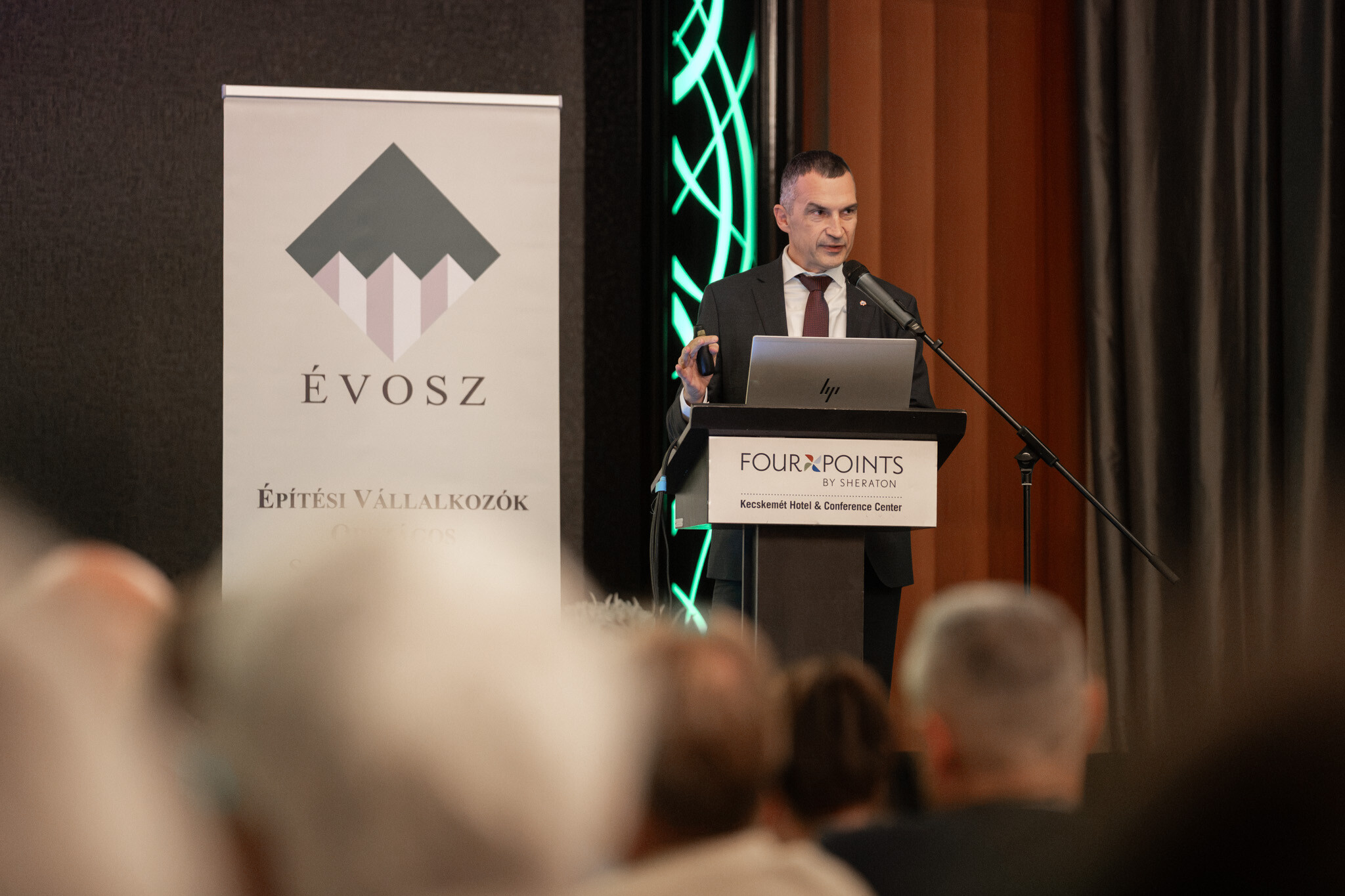
On the other hand, the special retail tax included in the budget will place a heavy burden on the sector. „This has existed before, but it was a relatively small amount: 0.15%. This is now rising to 4.5%, meaning that nearly 20% of profit relative to turnover will be absorbed by this. It will have a noticeable impact.”
Source: Link








Mester Street is being redeveloped in a confined space alongside tram traffic

Plans are in place for a new depot and track modernisation to accommodate the CAF trams

We do need a pump after all! – How does the BIM pay for itself in industrial investments?

The government wants 10-year development cycles for the construction sector

Four new bridges to be built in the heart of the former industrial city

Rain gardens are coming to Budafok, with over 3,000 square metres of green space set to be developed

Contemporary art deco in Csopakon

Safer driving on the motorways: new digital signs for the MKIF
-

 Bound track 2026. 09. 18.
Work has begun: the spur line will provide a direct rail link between Szombathely and Zalaegerszeg
-
Industry news 2026. 09. 19.
Duna Aszfalt paid more than 10 billion forints in interest to state-owned banks
-
Current at 2026. 09. 17.
The contractors for the Szolnok spa have brought a lawsuit against the city to secure payment of their final invoice
-
Climate-X 2026. 09. 22.
From the heating plant to the library – solar panels are to be installed on eight local authority buildings in Kiskunfélegyháza