What is being built?
The new hall built in Baja will not only serve the sport of ice hockey

On 18 September, the Baja Ice and Leisure Centre was handed over. Ice and Leisure Centre.
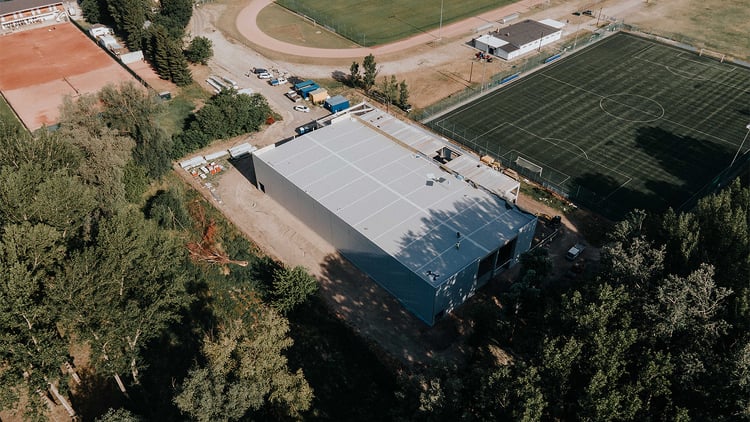
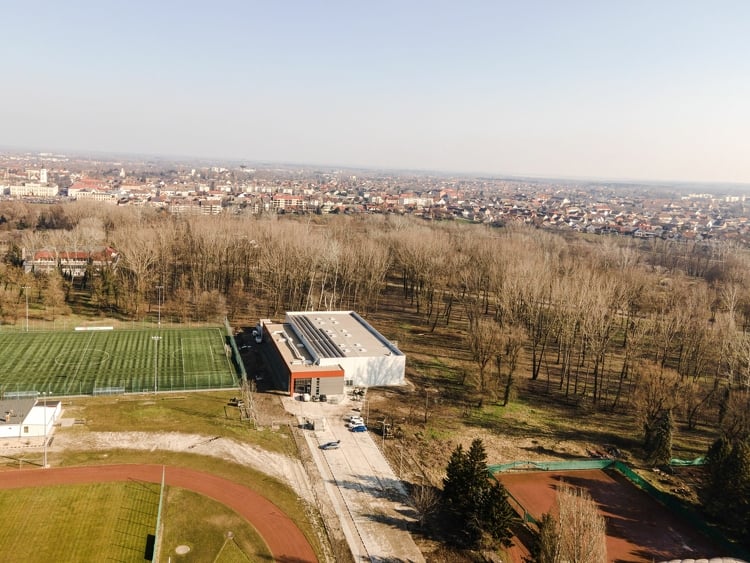
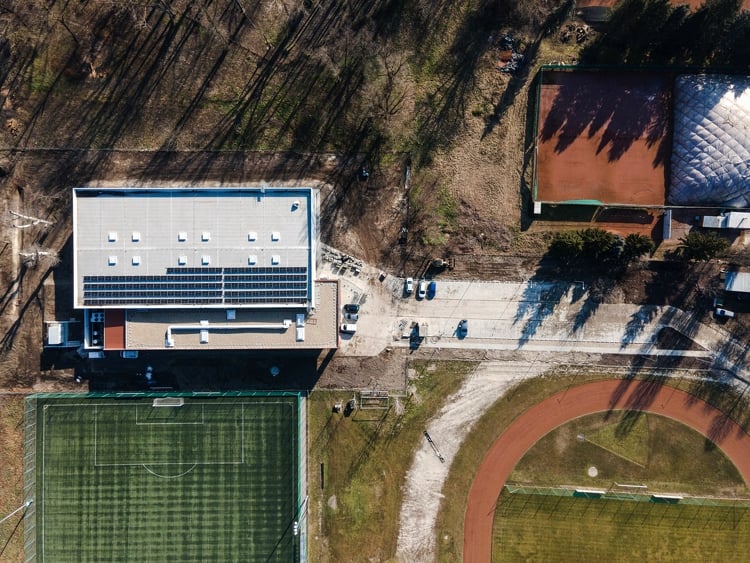
The project consists of a 2,500 square metre, two-storey solar-powered hall with 210 seats during hockey games.
Our newspaper obtained information about the details of the project from the contractor, INETON Kft., which has now built the 35th standard-size indoor ice rink in Hungary.
The building can serve more than just ice hockey
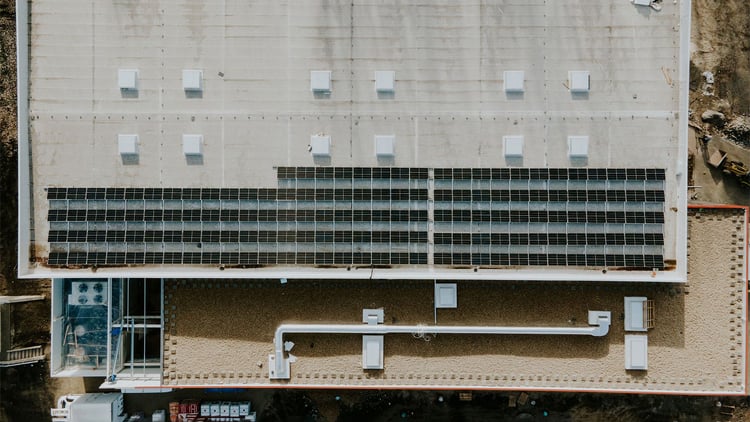
The works, which started in September 2021, were completed in spring 2023, with the technical handover taking place at the end of May after the trial run, according to the environmental project manager of INETON. Zoltán Kulik said that the 10-meter-high ice hall was built with social facilities, including a canteen, changing rooms and a medical room. "The tasks also included paving the pavement around the building and the 41-space car park, as well as the access road," he added. In addition, a 50 kW solar panel system was installed on the roof of the building.
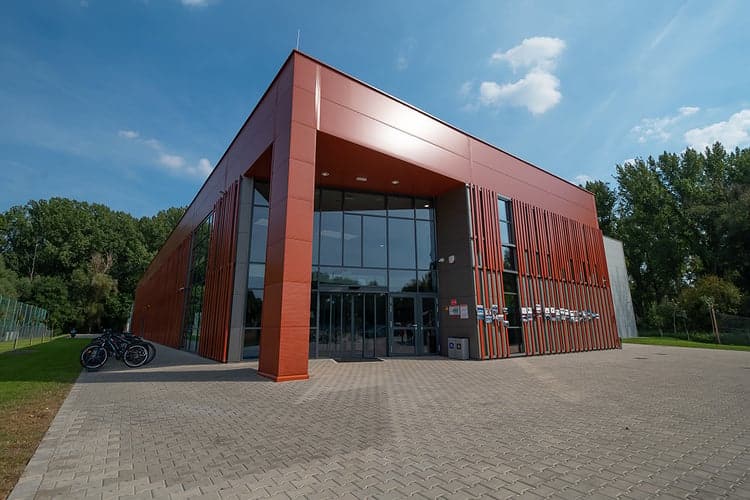
According to the project manager, the primary function of the ice rink is as an ice skating rink, hosting the local hockey team's training sessions and matches, four to five times a day.
"At the same time, the dimensions of the hall also allow for international hockey matches," he explained. "In addition, concerts, other events or even dry training sessions can be held in the hall, as the system of boards and the rubber mat around the rink have been designed to be demountable."
In addition to ice hockey practices and matches, the BALU-T Recreational Sports Association, which operates the facility, also organises weekend public skating sessions and provides skating for local kindergarten and school children as part of physical education classes. A further stated aim is that the construction of the hall will enable them to provide a higher quality of service for ice sports and other recreational activities, ensuring a much longer season than before.
More than 21 kilometres of cooling pipes laid
One of the most complex and exciting parts of the project was the installation and commissioning of the complete electrical, mechanical, cooling and heating systems. Zoltán Kulik said that the aim was to create an ice hall that would operate all year round, even in the hot summer months. A TRANE-type chiller was installed to cool it, which was chosen on the basis of previous positive operator experience.
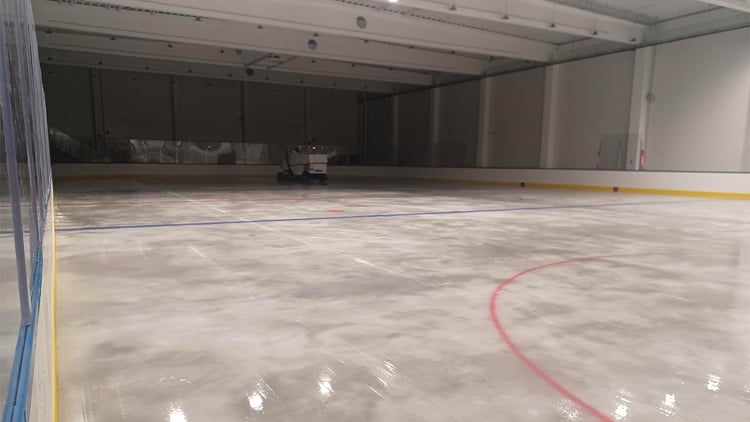
"To cool the track body, we laid more than 21 kilometres of cooling pipes in the reinforced concrete structure of the cooling concrete", said Zoltán Kulik. The cooling circuit of the system was filled with 14 cubic metres of glycol as a coolant. "In order to form ice 3-4 cm thick, a refrigerant of minus 8 degrees Celsius has to be circulated," he explained.
The waste heat from the installation is used for winter heating
XPS insulation 16 centimetres thick is placed under the cooling concrete track, so that the cooling medium, kept at minus 8 degrees Celsius and circulated by pumps, only transfers the cold towards the hall. "The cooled concrete surface, surrounded by a slate rink, can easily form a layer of ice 3-4 cm thick for skating with continuous water spreading," explained the project manager. "After each use, the ice surface is maintained with a machine called Rolba, which repairs any damage to the ice surface, creating a mirror-smooth surface."
In the interests of economy, the cooling technology described above will also provide cooling for the social building attached to the ice hall. At the same time, the building's automatic system uses the waste heat from the cooling equipment to heat the building in winter.
A major challenge was to find the optimal stratification
Zoltán Kulik also mentioned the most significant challenges of the development: "Certain details had to be redesigned in parallel with the works, including the design of the cooling concrete layer arrangement. An important aspect was that the layering had to be designed in such a way that the surface could accommodate the secondary functions of the hall, but also economically allow for the main function of ice formation."
To achieve this dual function, the aforementioned concrete covering of the cooling pipes had to be optimally designed and constructed.
"In terms of cooling, it is optimal to have as little concrete covering on the cooling pipes as possible, and the secondary function of the hall requires as thick a concrete covering as possible to avoid damage to the concrete surface and the pipe coil in it during use. The optimum layer arrangement and layer thicknesses were achieved by working together with the designer, the technical inspector and the client."
Source : Link









The first municipal thermal power station in Transylvania is under construction

A huge brush was driven through the Sopron tunnel on the M85 – with video

The town centre on the banks of the Tisza is being regenerated

The Market has fulfilled its promise: it has delivered the 10,000 tonnes of natural stone offered for the raising of the bottom sill at Paks

Rain gardens are coming to Budafok, with over 3,000 square metres of green space set to be developed

Contemporary art deco in Csopakon

Four new bridges to be built in the heart of the former industrial city

Safer driving on the motorways: new digital signs for the MKIF
-

 Industry news 2026. 08. 18.
Students were introduced to the high-tech construction industry at BME’s field camp in Göd
-
Bound track 2026. 08. 17.
New pedestrian crossings and a junction with traffic lights are being built in Angyalföld
-
What is being built? 2026. 08. 18.
Hungary’s new McDonald’s restaurant has moved into a modernist listed building in the centre of Budapest
-
What is being built? 2026. 08. 18.
New paving, a playground and visitor facilities are being planned for the Várkör area in Pannonhalma