Road building
Csepel’s main crossing is to be modernised – a contractor is being sought for the refurbishment of Kvassay híd

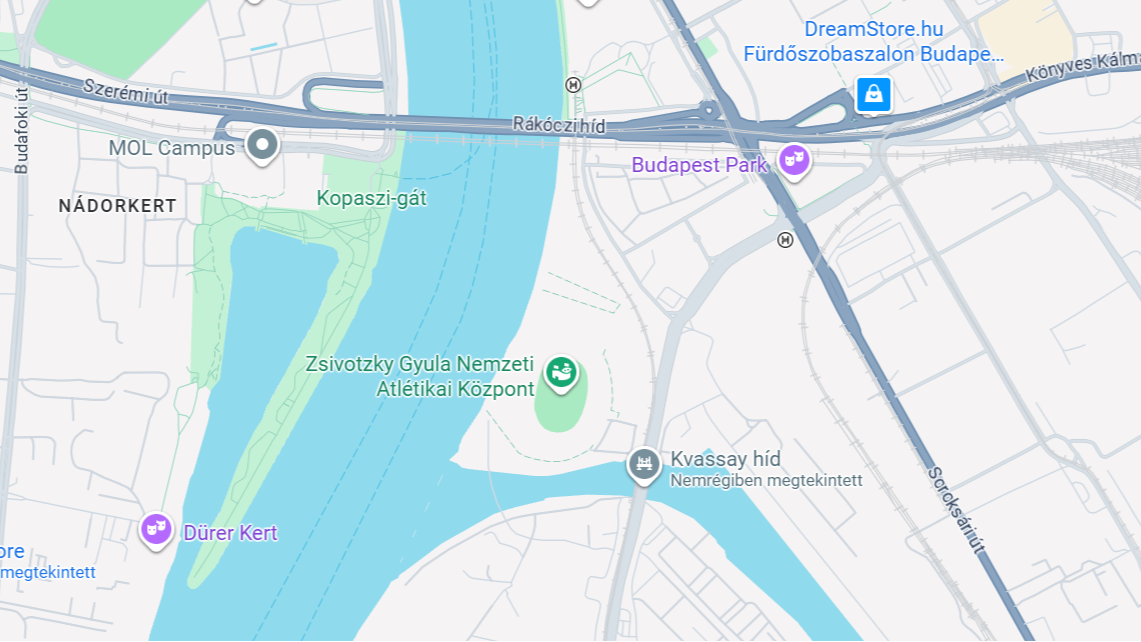
Csepel Island and Pest’s most important crossing are named after Jenő Kvassay, the engineer who played a key role in the regulation of the Soroksár section of the Danube and in the construction of the Csepeli Szabadkikötő. The original version was built between 1926 and 1927 as part of the road leading to Szabadkikötő, spanning the Ráckeve (Soroksár) branch of the Danube. It was constructed as a two-span, truss-type, segmental girder bridge with a lower-deck layout. Its steel structure was manufactured by MÁVAG in 1927.
Like most crossings, this one was destroyed during the Second World War: it was blown up by German troops in 1944. The restoration work carried out between 1946 and 1947 utilised, in part, original components recovered from the Danube and, in part, scrap material from other bridges. The crossing, which was intended to be temporary, ultimately served traffic between South Pest and Csepel for 50 years. In 1997, the plans for the new bridge were drawn up by FŐMTERV, and was built by Hídépítő Rt. at the turn of the millennium with an upper-deck, orthotropic steel deck structure, two 8-metre-wide bridge spans and 2.2-metre-wide pavements.
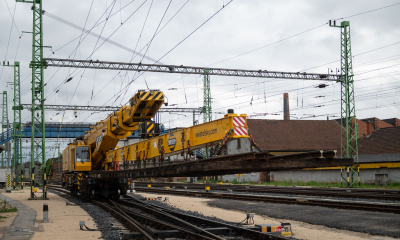
Meanwhile, the Csepel rapid transit bridge was built alongside it in the early 1950s; it is similar in both form and alignment to the earlier road bridge, and as it carries traffic on the H7 HÉV line – with an average of 260 trains passing over it each day – it is Hungary’s busiest railway bridge.
Bridge and road construction jobs are also available for applicants
Back then we also reported that the railway bridge underwent renovation in 2020, during which the supporting structural elements were partially replaced, corrosion protection was applied, the railway track was completely rebuilt and the overhead line system was replaced. Now the time has come to carry out maintenance on the road bridge, which is now more than a quarter of a century old.
Applications are being accepted until 28 October for the replacement of the expansion joints on Budapest Közút Zrt. and Kvassay híd. The scope of work involves replacing the expansion joints on both carriageways, covering a total width of 18.26 metres, on the Kvassay híd structure (marked C-1 in Budapest) leading to Csepel. Furthermore, the reinforced concrete abutment walls must be rebuilt up to the upper surface of the levelling slab. All associated works will be the responsibility of the successful tenderer: excavation, waterproofing, backfilling and the laying of the surface course. In addition, a drainage inlet must be installed on the superstructure at the Pest abutment; one maintenance access hatch per abutment must be constructed in the air gap, fitted with a maintenance railing; and the abutments must then be cleaned.
The successful tenderer will also be required to carry out road surfacing works: the asphalt wearing course needs to be replaced along the entire length of the bridge; furthermore, as part of the longitudinal profile correction, the level of the wearing course must be adjusted over a 10-metre stretch measured from the end of the levelling slab at the Soroksár bridge abutment.
Source: Link










A space brimming with information and encounters – that’s what the Infotér CONTECH was like

As efficiently as possible and at the lowest possible prices! – an interview with Dávid Vitézy

Csepel’s main crossing is to be modernised – a contractor is being sought for the refurbishment of Kvassay híd

The new portal structure on the M1 was installed in the pouring rain

Four new bridges to be built in the heart of the former industrial city

Rain gardens are coming to Budafok, with over 3,000 square metres of green space set to be developed

Contemporary art deco in Csopakon

Safer driving on the motorways: new digital signs for the MKIF
-

 Energy 2026. 09. 01.
Wind energy tenders are now open; technical compliance alone is not enough
-
What is being built? 2026. 09. 01.
There is good news regarding the Láng Negyed project – the investor has spoken out
-
Climate-X 2026. 09. 01.
A major US investment is boosting energy investment in Romania
-
Bound track 2026. 09. 01.
The SWIETELSKY Vasúttechnika Kft. has been declared the winner in two railway development projects