Water management
As efficiently as possible and at the lowest possible prices! – an interview with Dávid Vitézy

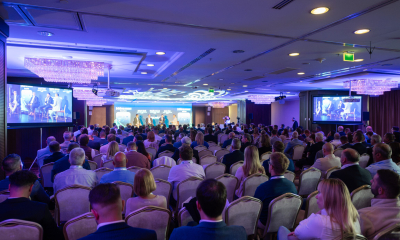
The three-day Magyar Közlekedési Konferencia event taking place in Eger was not only interesting this time for its presentations covering a wide range of transport-related topics: the Minister of Transport and Investment, who was appointed in May, met face-to-face with representatives of the road sector for the first time. Dávid Vitézy gave an interview to Magyar Építők following his presentation, which opened the conference attended by more than 700 people.
Minister, you mentioned in your presentation that the annual budget allocated to the development of the road network is set to increase significantly. In this context, one of the stated objectives is to enhance the procurement autonomy of Magyar Közút. What steps will be taken to achieve this, and what can we expect?
Obviously, I wouldn’t want to prejudge the 2027 budget just yet, as it is the Finance Minister’s responsibility to ensure it is drawn up properly. That said, we are in the final stages of negotiations,
and our clear aim is to increase the road-renovation budget substantially: in other words, to ensure that significantly more funding is allocated to the renovation of the national road network than has been the case to date.
In 2026, the budget allocated 20 billion forints for this purpose, all of which we spent on road repairs, right down to the last penny.
To put this into perspective: in order to maintain, say, the Austrian standard of upkeep on the national road network, we would need to spend 550 billion forints a year. We will not achieve this next year, as there is neither the budgetary leeway nor the completed public procurement procedures required to do so.
At the same time, if we can just manage to take a significant step forward in catching up and reach, say, an expenditure level of around 100 billion forints, that alone would allow us to improve the situation noticeably.
The condition of the national road network is appalling; it has been virtually completely neglected for years. Clearly, Magyar Közút is doing its best to manage this situation as best it can, attempting to patch up the worst potholes and tackle the roads in the worst condition, but there are insufficient resources for this. We now wish to change this, and this also represents a significant shift in priorities: because, in practice, the money we save – for example, on the third and fourth lanes of the roads connecting to the Mohács bridge – will be channelled in its entirety into public road renovation. We are also endeavouring to allocate as much as possible of the savings we can make in connection with the motorway concession towards road refurbishment, the development of national public roads or bridge refurbishment programmes.
In response to the other part of the question, regarding the procurement autonomy of Magyar Közút: János Lázár had previously decided that the public road operator could only carry out all its procurement through MÁV. As a result, even road renovations have recently been carried out as part of the MÁV project. We are reviewing this practice. Clearly, there are efficiency benefits to be gained from joint vehicle procurement, or from MÁV procuring IT or shared services on behalf of Magyar Közút, and this will continue to be the case in the future.
At the same time, in the case of major road renovation tenders, which are now getting underway, Magyar Közút will be able to act independently, and individual projects will not have to go through the bureaucracy of MÁV, which I hope will speed things up.
A very significant process is now getting under way, aimed at establishing a framework contract system based on competitive re-tendering for road resurfacing projects in every county across the country. The aim of all this is to ensure that whatever funds can be allocated from the budget for road repairs can be spent swiftly, and that Hungarian contractors, in particular, are given the opportunity to carry out medium-scale road repairs as much as possible.
The annual expenditure of 100 billion forints in question represents a significant increase compared with the 20 billion. What can this budget cover, and what priorities should be set? Particular attention should be paid to the figures cited in the presentation, which indicate that there is a significant backlog in terms of both public roads and bridges.
As regards bridges, I would like to emphasise once again that there are 93 bridges in very poor condition on the national road network: we have specific data on where the critical conditions are. The scheduled renovation of these must begin in the coming years; the situation cannot be allowed to continue as it is. In some places, traffic restrictions are already in place as a result: on dual-carriageway roads, traffic is restricted to a single lane.
As for road repairs, we are, of course, trying to proceed on the basis of the condition of the roads. It must be recognised, however, that a significant proportion of the funding to date – whether from EU funds or the Hungarian Village Programme – has, in practice, gone solely to minor roads linking small settlements. This is, of course, an important objective, and spending on these roads is necessary, but the biggest loser in recent years’ transport policy has been the main road network that forms the backbone of the country. Virtually no funding has been allocated to it. Years have passed without any substantial road repairs being carried out on the single- and double-digit national main road network.
So what we would like to allocate additional resources to is ensuring that work begins on repairing the most critical sections of national roads with the heaviest traffic – those carrying tens of thousands or even hundreds of thousands of vehicles.
Based on the objectives outlined so far, the focus in the coming years will be on public road development. At the same time, the question arises as to what priorities will remain for these projects should the concession agreement MKIF – under which several expressway development projects were planned – be terminated?
Firstly – even before we turn to the subject of developments – I would like to emphasise that we do not wish to take a step backwards with regard to the operation of expressways. It is not our aim for Magyar Közút to take over the expressways and operate them to the same standard as it has, out of necessity, had to operate the national road network to date. So we definitely want to achieve a level of operation and funding – which will still be much cheaper than that of MKIF – whereby Magyar Közút is funded on an SLA (Service Level Agreement – ed.) basis in the case of motorways.
This system would be new to the road authority, so I’ll explain it in detail to make the difference clear: Magyar Közút is currently funded in such a way that it can cover its most basic operational costs. So, it uses this funding to operate its machinery, rent its head office and pay its staff, but it does not carry out any road resurfacing; it simply clears the snow and, if there is a very large pothole, it repairs it.
Furthermore, any road resurfacing – which constitutes a more significant intervention – is subject to individual budgetary decisions. In our view, this is not a viable way to operate a motorway.
There must be a system for setting aside funds for road repairs such that, should large-scale repairs be required, the process can proceed automatically without the need for separate government decisions, separate authorisations from the Ministry of Finance or separate budgetary negotiations.
This is what I am fighting for now, because this is the one advantage of the concession. It is done at an extremely high cost, but even so, that advantage remains – and this is obviously seen as a positive by the engineering community, and amongst motorists too – namely, the maintenance of a stable and predictable road surface. So we must ensure that, if the state operates it, it does not do so in the same way as it does the national road network, but to a higher standard.
So, as regards expressways, this is now our objective, and accordingly we intend to hand over the operation of the motorways to Magyar Közút from next April.
Turning to the second part of the question, caution is required when it comes to major motorway developments.
All motorway development projects – including the construction of new roads, the widening of existing roads to two lanes in each direction, and other expansion works – that are currently on the agenda or have been announced constitute a total investment package of around 11,000 billion forints.
This includes, amongst other things, the MKIF projects, the M200, the ongoing three-lane widening of the M1, the three-lane widening of the M7 and the M3, the section of the M34 leading to the border, the completion of the M3, and I could go on. Also included in this sum are those projects which were also mentioned but were not even included in the MKIF concession; in other words, even the previous government did not consider it realistic to complete them within 35 years. These include, amongst others, the M100, the northern section of the M0, the M9 and the widening of Road 47 to two lanes in each direction.
Compared to this figure of 11,000 billion forints, when the budget performed very well in certain years, there were a few hundred billion forints available annually for developments of this kind. We need to reassess this entire portfolio. We need to identify which elements are so socially important, useful and indispensable that we simply must spend on them in the coming years. Furthermore, we need to review whether the technical content of these projects is justified. It is at the end of this comprehensive review that a decision will be made on what projects will be launched following the investments currently underway.
As I mentioned in my presentation, in 2027 there will be an even larger-scale motorway construction project than this year: the construction of the Mohács bridge, the M49 motorway and the M1 motorway will, in fact, be stepped up even further.
Construction output on these projects will be even higher than this year, so there is certainly no question of a slowdown. The real question is: once these projects come to an end in 2027–28, what will be launched next, and we will obviously need to put that out to tender for construction next year.
So our main task now is to select, from this huge volume of projects that are, in one way or another, in the pipeline – although, of course, there isn’t enough money to fund them all at once – those that will contribute most to the development of the Hungarian economy. We are currently carrying out this work within the framework of the national transport strategy.
Naturally, there has been little mention of railway developments so far on the opening day of the transport conference; however, you previously stated that it would be important for small and medium-sized Hungarian companies to be able to participate successfully in the railway construction boom that is now getting under way. What prospects do you see for this?
At present, Hungarian companies are actually involved at two levels in this large public investment sector. On the one hand, there are a great many contractors on the market – who, I believe, are in many cases more independent of politics than the main contractors – who are involved in various construction tasks, working either behind foreign contractors or behind large Hungarian construction firms linked to the previous government, and who carry out the bulk of the work.
I believe that there may well be some amongst them who, sooner or later, will grow into the role of main contractor, provided there is genuine competition and they are not being held back. There will be those who, whoever the main contractor may be, will work as contractors in these sectors. I have faith in this, and we are endeavouring to help as much as we can with the means at our disposal to ensure that, in the tenders now to be issued, many from this middle tier of Hungarian entrepreneurs have the chance to grow. However, we will not be designating who should be selected; we will not be intervening or tailoring a tender to a specific party, as has, unfortunately, happened in recent years.
So no one should expect us to be the ones to decide who the new V-Híd should be – that’s not going to happen. I am confident, however, that there will be players in the construction sector within the Hungarian economy who will recognise this opportunity – the launch of such a massive wave of railway construction investment here – and who will be able to put together the team and the capabilities needed to carry out investments on this scale.
And, of course, those players who have been here all along – whether as foreign-owned companies or not – and who have consistently contributed to the development of the Hungarian railway network – sometimes in a consortium with V-Híd, sometimes with other players – are likely to remain here. Now, of course, a completely false narrative has emerged in political discourse, which pretends that there are ‘Hungarians’ on one side and ‘foreigners’ on the other. Whereas, if we look at V-Híd, the consortium formed with Strabag and Swietelsky has been involved in practically every railway construction project. So let’s leave this text out, because it does not reflect the reality of how things have operated in recent years, if we actually take a closer look.
My responsibility to taxpayers and passengers is to ensure that we spend the EU funds at our disposal as efficiently as possible and achieve the lowest possible fares. We will ensure there is genuine competition – not the sort seen, for example, with contract Déli Körvasút, which turned out to have been rigged – but genuine competition in Hungarian railway construction projects, so that we can channel this enormous amount of funding for the benefit of passengers as soon as possible.
It is also important that we are able to overcome the current difficulties facing the Hungarian construction industry by ensuring that these major railway construction projects get under way as soon as possible, using the EU funds that have been allocated to Hungary.
As an industry publication, we represent both civil engineering and building construction firms. The latter are rightly asking: as railway investment begins to take off, what can the building construction sector expect?
Clearly, railway construction projects also involve significant structural works: a considerable number of stations and other structural facilities are included in these. I would also like to highlight that, thanks to the Wekerle Program programme, we are aiming to achieve an upturn in housing construction. We will complete our review of Otthon Start projects, as well as various priority projects, by the end of December, and following this we will make a proposal regarding the precise new regulatory framework under which new housing construction projects should be launched.
In addition, we are working on a support programme funded by the EU, and we would like to see regulations – although I would not wish to pre-empt the final proposals of Pénzügyminisztérium at this stage – but we are working with them to introduce, in tandem with the budget, new instruments capable of creating tax and subsidy incentives in the areas of both housing renovation and new housing construction.
These tools are, of course, most important for those who will be able to move into such flats or renovate their own homes, but they can obviously also create numerous new opportunities for the construction industry.
Source: Link









A space brimming with information and encounters – that’s what the Infotér CONTECH was like

As efficiently as possible and at the lowest possible prices! – an interview with Dávid Vitézy

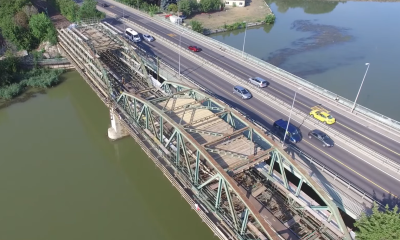
Csepel’s main crossing is to be modernised – a contractor is being sought for the refurbishment of Kvassay híd

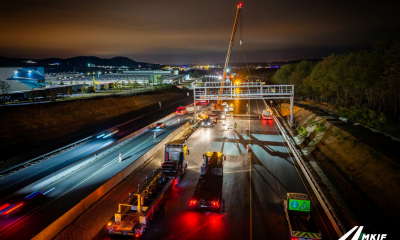
The new portal structure on the M1 was installed in the pouring rain

Four new bridges to be built in the heart of the former industrial city

Rain gardens are coming to Budafok, with over 3,000 square metres of green space set to be developed

Contemporary art deco in Csopakon

Safer driving on the motorways: new digital signs for the MKIF
-

 Energy 2026. 09. 01.
Wind energy tenders are now open; technical compliance alone is not enough
-
What is being built? 2026. 09. 01.
There is good news regarding the Láng Negyed project – the investor has spoken out
-
Climate-X 2026. 09. 01.
A major US investment is boosting energy investment in Romania
-
Bound track 2026. 09. 01.
The SWIETELSKY Vasúttechnika Kft. has been declared the winner in two railway development projects